How Heat Waves Are Stress-Testing Hospital Workforce Management


Summer has become a stress test for hospital operations. Heat waves are driving sharper fluctuations in patient demand across many regions. Emergency departments see higher utilization. Vulnerable populations require more acute support. Capacity pressures shift quickly across units and care settings.
Simultaneously, workforce availability becomes less predictable. Vacation schedules and rising patient volumes create a tighter operational window for hospitals and health systems.
Health systems can improve operational efficiency during heat waves and census surges by centralizing workforce management, identifying coverage gaps earlier, coordinating internal labor faster, and using workforce intelligence tools to reduce reactive staffing and improve patient flow.
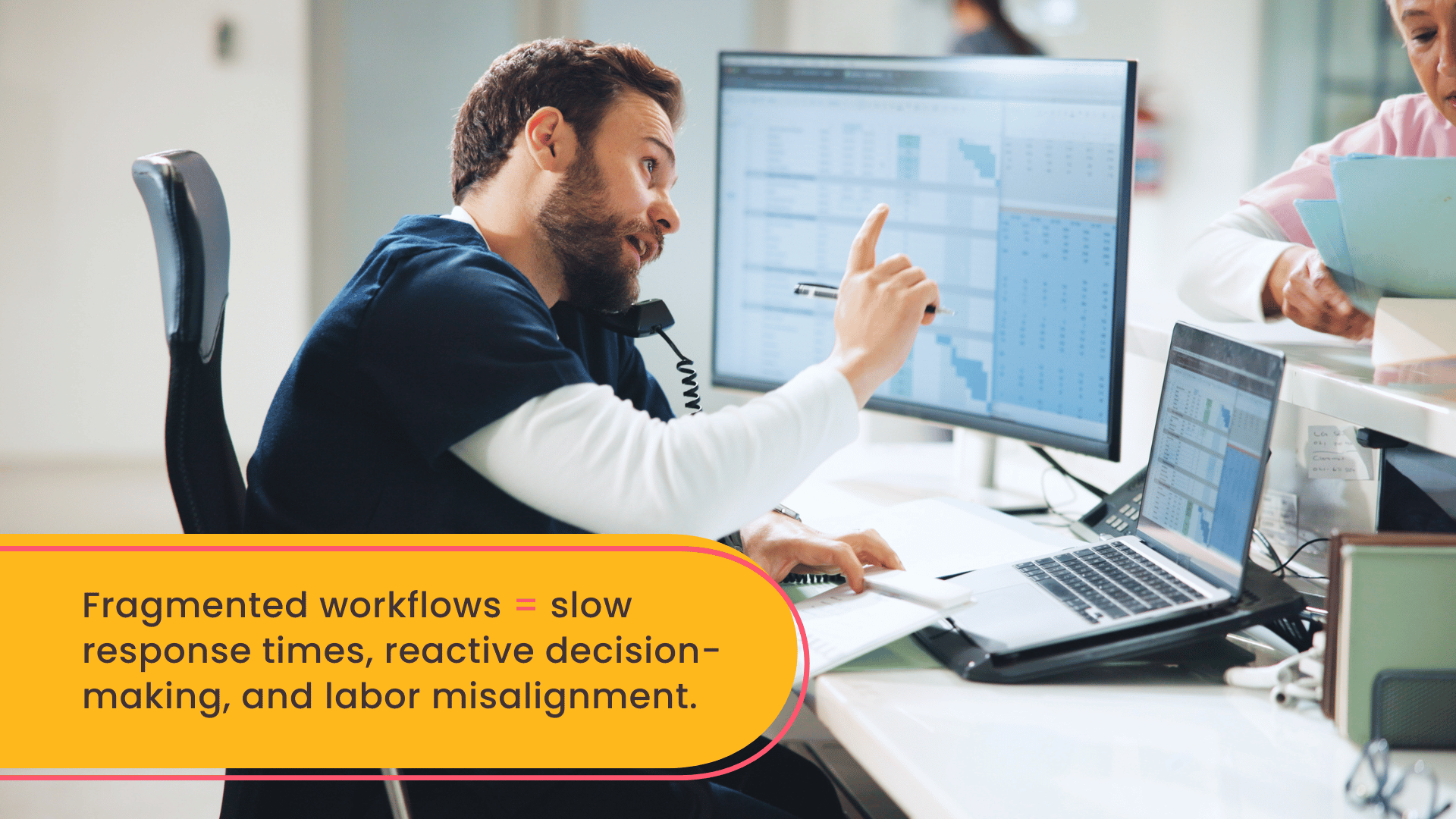
Fragmented Workflows
The limits of disconnected workforce systems.
Many health systems still manage staffing with disconnected tools that were never designed to operate as a single system. The result is fragmented workflows that create friction when leaders need to move labor quickly across the enterprise, especially during heat waves and census surges.
The good news is that many health systems have strong clinical teams in place. The larger opportunity lies with improving workforce coordination across facilities, departments, and labor pools.
With stronger workforce visibility and centralized staffing alignment, health systems can respond faster during periods of rapid change while improving labor efficiency across the organization.

Workforce Visibility
Building a unified view of staffing demand and supply.
To address fragmented workflows, leading health systems are moving toward connected workforce operations and centralized workforce management models that provide a real-time view of workforce capacity across the enterprise.
As a result, operations leaders can:
Identify scheduling gaps early.
Coordinate internal labor faster.
Improve staffing response times.
Reduce unnecessary premium labor.
Strengthen census surge response at scale.
Standardize workflows across the enterprise.
Staffing Alignment
Aligning workforce decisions with real-time patient demand.
But visibility alone isn’t enough. The next step is turning that visibility into coordinated action across the enterprise.
Hospital patient flow challenges are often viewed through the lens of beds, admissions, or discharge delays. However, workforce coordination also plays an equally critical role in operational throughput.
Health systems are improving patient flow during heat waves and census surges by prioritizing workforce agility as a core operational strategy.
To do this effectively, they need real-time alignment across the enterprise, which requires strong visibility into:
Open shift demand.
Available internal labor.
Credentialed workforce capacity
Cross-unit staffing opportunities.
Staffing fulfillment timelines.
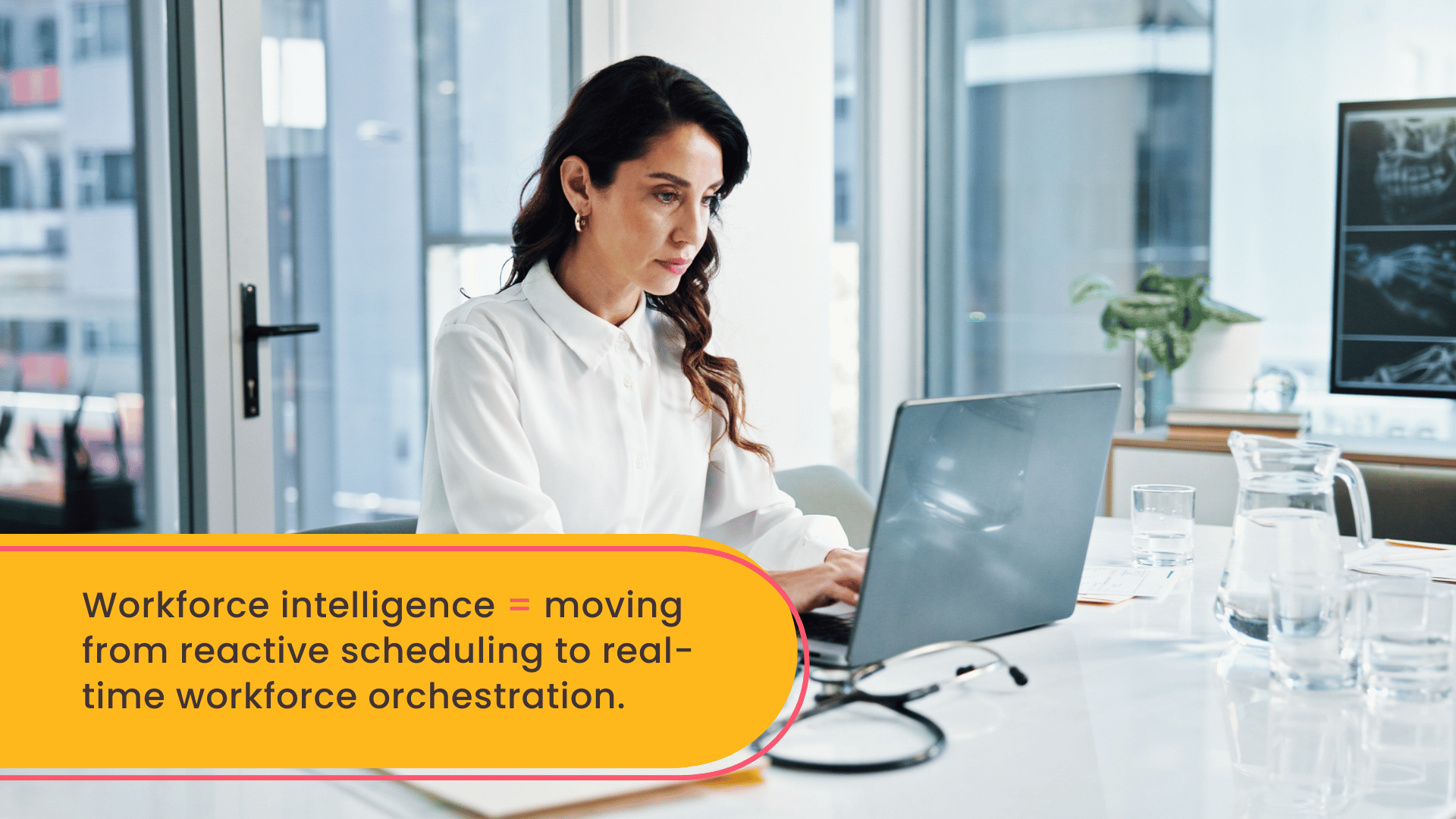
Workforce Intelligence
Enabling real-time workforce coordination.
Improving visibility and alignment at scale requires process change and healthcare workforce management technology that unifies fragmented data into a real-time operational view.
Workforce intelligence platforms, such as ShiftMed, provide a unified view of labor capacity across hospitals, departments, and float pools. Instead of fragmented data, leaders can track workforce availability as demand changes.
This creates two foundational capabilities.
It enables real-time awareness of staffing conditions across the enterprise. Leaders quickly identify open shifts, available labor, and credentialed capacity without waiting for manual updates or siloed reporting.
It supports real-time coordination. Workforce decisions can be made dynamically, enabling health systems to respond more quickly to fluctuations in demand, including heat waves and census surges.
Essentially, this is where workforce visibility becomes actionable, and workforce alignment becomes operationally executable.
In practice, staffing decisions move from reactive coordination to real-time workforce orchestration, resulting in a more agile operating model that supports labor efficiency and patient flow during periods of volatility.
Operational and Financial Impact
Translating workforce agility into measurable enterprise performance.
When health systems move from fragmented staffing workflows to centralized workforce management, the impact is efficient labor deployment and consistent care during high demand.
The most immediate shift is in labor utilization. Internal staffing pools are used more effectively. Open shifts are filled faster. Premium labor becomes more targeted instead of reactive.
Response times also improve. With stronger visibility and real-time coordination, leaders spend less time resolving scheduling gaps and more time managing overall system flow. That difference becomes especially visible during heat waves and census surges, when timing directly affects patient throughput.
Furthermore, there’s a broader financial effect. Improved workforce alignment reduces labor spend variability. It supports more predictable scheduling patterns and limits unnecessary escalation to higher-cost workforce options.
But the more important outcome is operational stability. Health systems gain a more consistent ability to match workforce supply with patient demand, even as conditions change quickly.
Over time, this creates a compounding effect. Better coordination leads to better flow. Better flow supports more efficient staffing decisions. And more efficient staffing strengthens operational and financial performance, establishing a more resilient and responsive health system overall.
The Future of Hospital Workforce Management Is Real-Time Workforce Agility
Heat waves are a defining operational challenge for hospitals and health systems. As patient demand grows more volatile, workforce management can no longer operate through fragmented systems and reactive staffing models.
Leading organizations are now building more connected workforce operations with stronger visibility, real-time staffing alignment, and workforce intelligence that improves agility across the enterprise.
The result is faster staffing coordination, stronger patient flow, better labor efficiency, and a more resilient operating model during periods of rapid change.
For health systems looking to strengthen workforce agility during heat waves and census surges, the opportunity creates the operational infrastructure to align workforce supply with patient demand in real time.
Contact ShiftMed today to see how your hospital or health system can centralize workforce management, enhance workforce visibility, and coordinate labor efficiently to meet the challenges of heat waves and census surges.