Healthcare Workforce Management Is Evolving: From Workforce Data to Workforce Intelligence


Health systems generate an enormous amount of workforce data. Every completed shift, callout, overtime hour, labor dollar, and staffing adjustment creates a valuable operational signal. Yet many leaders still lack the visibility to answer critical questions: Will the right clinician be in the right place next week? What will it cost to meet demand?
The challenge these leaders face is turning their data into workforce intelligence that helps them anticipate demand and act before workforce challenges emerge.
In this article, Matt Abbott, Director of Product Management at ShiftMed and a registered nurse, explains how healthcare workforce management is moving beyond dashboards and historical reporting toward a more intelligent, predictive approach.
He shares insight on how your health system can use existing data to anticipate staffing needs, coordinate clinical labor across units and facilities, and make better workforce decisions earlier.
Most Health Systems Have a Visibility Problem
After spending 18 years in nursing, Abbott believes that many staffing challenges stem from a lack of workforce visibility.
Most health systems have invested in technology over the past decade, from scheduling platforms to time-and-attendance systems to vendor management solutions. While each serves an important purpose, they aren’t designed to function as a unified workforce operating system.
"A nurse manager might ask something as simple as Am I going to be short-staffed on Thursday night?," Abbott said. "Instead of getting a quick answer, they're often jumping between four or five systems, pulling the pieces together manually, and hoping they haven't missed anything."
When nurse managers are working across fragmented processes, critical decisions slow down at the exact moment when speed and clarity matter most. So, instead of getting ahead of staffing risk, managers react too late and must rely on a more expensive resource or go short-staffed.
Abbott goes further, noting that beyond a certain point, more information can hinder decision-making. When leaders are overwhelmed by alerts and disconnected data points, critical signals can get buried and delay important decisions. As a result, choices are made later, more reactively, or sometimes by gut instinct alone.
"Until workforce data is connected and pointed at the next decision, more information just creates more noise," he added.
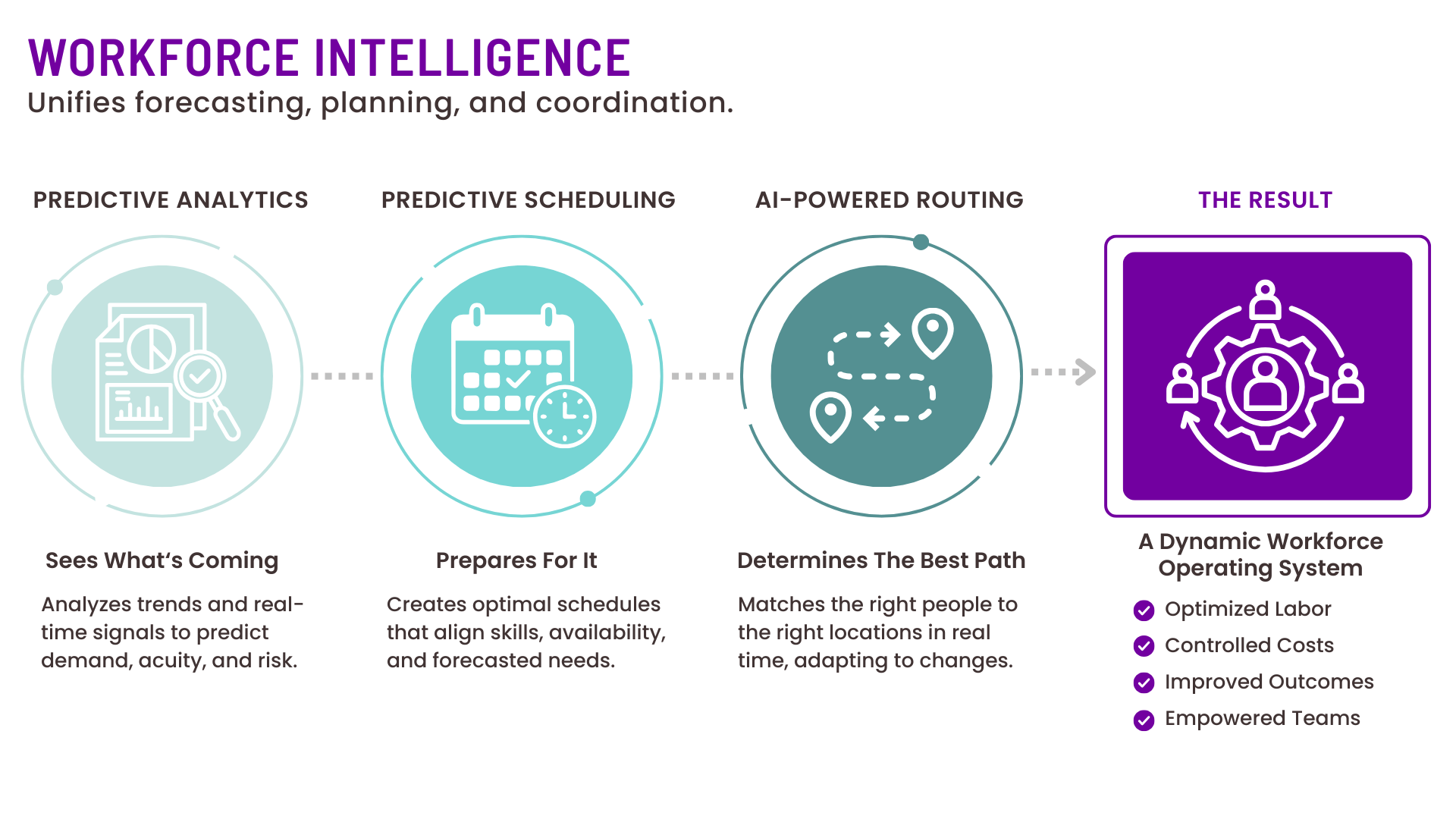
What Is Workforce Intelligence in Healthcare?
Workforce intelligence in healthcare gives health system leaders the ability to see, understand, and act on workforce trends before they become operational challenges. By combining predictive analytics, workforce planning, and intelligent labor coordination, it transforms fragmented workforce data into actionable insights that help leaders anticipate demand, optimize capacity, and make proactive decisions about clinical labor.
Healthcare Workforce Analytics Should Drive Decisions, Not Reports
Abbott sees a common misconception about healthcare workforce analytics in that its main job is to explain the past. "Most organizations already know what happened last quarter," he said. "The more important question is what needs to happen next."
Traditional reports measure turnover, overtime, agency utilization, and open shifts after the fact. While these metrics still matter, they don't prevent tomorrow's shortfall. A report showing 12 open shifts last week tells you nothing about the ICU gap forming next Thursday.
Predictive workforce analytics change the dynamic by surfacing workforce risks before they require a crisis response. By combining historical trends and real-time data, analytics give leaders the foresight to answer critical questions before decisions become urgent:
Which units will run short next quarter?
Which clinicians are at risk of burnout?
Where is nurse turnover trending?
What will agency spending look like in six months?
Predictive Scheduling Turns Insight Into Action
For decades, workforce decisions have been reactive. A callout occurs, census spikes, or a unit falls short of its staffing needs, and leaders respond with overtime, incentive pay, or agency labor. Every experienced operator knows the cycle of making decisions under pressure, working with limited options, and rising labor costs.
Predictive scheduling changes the timing. Forecasting models learn from historical census data, seasonal patterns, credentialing, availability, and real-time operational signals, and then project staffing demands up to 120 days out. So, instead of reacting to shortages after they hit, health systems can anticipate demand and act while options are still open.
“When you're staffing to the demand that's coming instead of the crisis that's already hit, every decision improves,” says Abbott.
He calls it moving from firefighting to foresight. With earlier visibility into workforce trends, leaders have more time to act. They can engage internal clinicians sooner, maximize float pool capacity, balance staff across units, and reserve agency labor as a last resort rather than the default. In fact, trimming overtime and agency reliance can lower labor costs by 10-12%, while steadier schedules support clinician satisfaction, retention, and workforce stability.
AI Workforce Management Is About Coordination, Not Just Automation
While most would describe AI in healthcare workforce management as automation, coordination is its most valuable role in healthcare staffing.
A health system makes thousands of staffing calls a day, from deciding who gets the open ICU shift to weighing overtime against cost and burnout risk to floating someone from another unit to cover a gap. Each decision is manageable on its own, but when stacked across every unit, every shift, every week, they create a level of complexity that requires more than experience and spreadsheets to manage effectively.
AI handles workforce coordination by matching qualified, available, and credentialed clinicians to open shifts while accounting for overtime limits, fatigue rules, and fairness guidelines. It automates routine decisions, keeps everyone informed in real time, and frees clinical leaders to manage exceptions and focus on high-risk decisions.
Furthermore, coordination starts with your organization, not the algorithm. You set the staffing priorities and encode your cost and quality preferences. AI then executes those priorities at a speed and scale no manager could achieve manually.
Healthcare Workforce Optimization Is a Clinical Discipline, Too
Healthcare workforce management usually gets framed as an operational discipline, but it's equally a clinical one. After all, the consequences of workforce decisions are felt at the bedside.
When nurses are asked to take on more than they can safely manage, it can become harder to recognize the small but important changes that signal a patient needs intervention. Abbott says, “When you’re carrying one patient too many, something has to give.”
The consequences of understaffing are well documented. Research shows that each additional patient assigned to a nurse is associated with a 7% increase in the odds of patient death within 30 days and a 7% increase in failure-to-rescue. The burden also falls on clinicians, with that same increase in workload raising a nurse's odds of burnout by 23%.
When shortages surface earlier, schedules become more predictable, and nurses notice. Retention improves when clinicians stop absorbing chaos every week. Healthcare workforce optimization, when done well, improves labor costs, patient outcomes, and nurse satisfaction.
Where Healthcare Workforce Management Goes From Here
By adding an intelligence layer to healthcare workforce management, more “what ifs” become reality. Schedules balance themselves, predictive analytics flags risks before they drive up labor costs, managers spend less time managing spreadsheets and text threads, and executives gain real-time insight instead of looking backward.
In the end, workforce intelligence isn't about accumulating more information. It's about helping your health system turn existing data into earlier, smarter staffing decisions. The health systems that lead will be those that can see workforce challenges coming, understand their options, and act before pressures reach the frontline.
With ShiftMed as your workforce intelligence partner, you can unify planning, scheduling, and coordination into one operating system that helps you anticipate needs, optimize labor, and reduce costs.