Women’s History Month 2026: Nurses Leading the Change in Sustainable Healthcare


Every March, Women’s History Month gives us a chance to recognize the women who didn’t just show up—they stepped up, spoke out, and changed the course of entire industries. The 2026 theme, Leading the Change: Women Shaping a Sustainable Future, celebrates women who built systems meant to last, creating lasting impact rooted in equity, resilience, and progress.
If there’s one profession that embodies that kind of leadership, it’s nursing.
For generations, women nurses have been the steady force behind safer hospitals, stronger public health systems, better patient advocacy, and more equitable access to care. They didn’t just improve what happened at the bedside; they reshaped how healthcare works.
From introducing sanitation practices that saved thousands of lives to breaking barriers in education, leadership, and health equity, these women helped build a healthcare system designed to serve communities for the long haul.
This Women’s History Month 2026, we’re honoring the women nurses who truly led the change, and whose legacy continues to inspire the way nurses care, advocate, and lead today.
Environmental Sustainability in Healthcare: Nurses for Safer Systems
Long before infection prevention protocols and public health infrastructure became standard practice, nurses were already redesigning healthcare to be safer, smarter, and more sustainable.
These women didn’t just provide bedside care. They improved sanitation standards, strengthened hospital systems, expanded access to care, and elevated professional nursing standards — building the foundation for today’s sustainable healthcare systems.
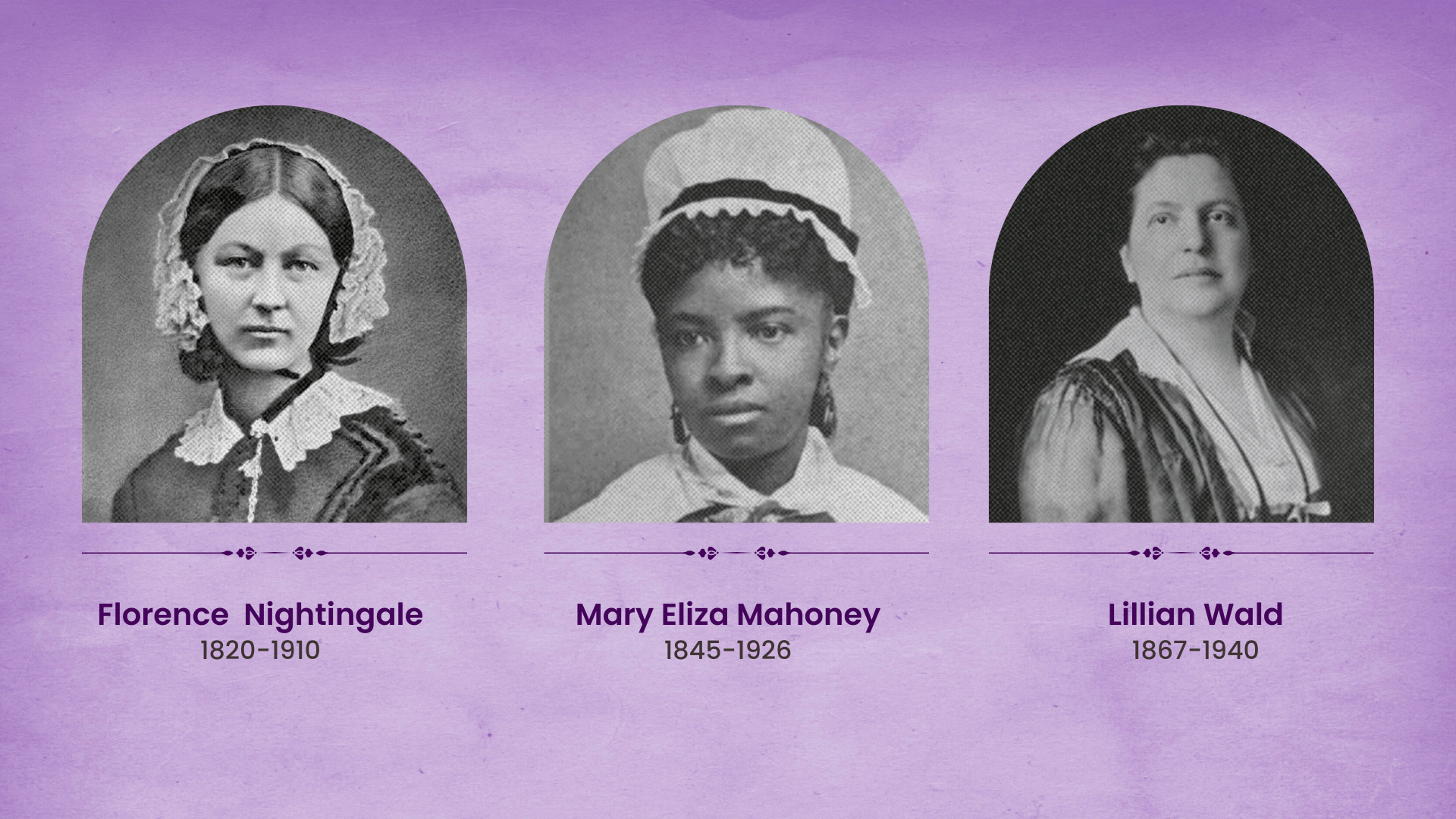
Florence Nightingale: Turning Data Into Safer Hospitals
Florence Nightingale is often called the founder of modern nursing, but her real impact was hospital reform.
During the Crimean War, she noticed that more soldiers were dying from preventable infections than from battlefield injuries. Instead of accepting high mortality rates as inevitable, she collected data, improved sanitation practices, increased ventilation, and reorganized hospital layouts.
The result? Mortality rates dropped dramatically. Her work laid the groundwork for modern infection control systems, evidence-based practice, and hospital quality improvement standards.
Today’s hand hygiene protocols, environmental safety measures, and patient safety initiatives all reflect her belief that strong systems prevent suffering.
Mary Eliza Mahoney: Strengthening the Nursing Workforce
Mary Eliza Mahoney became the first Black nurse to be professionally trained in the United States at a time when systemic barriers limited access to education and advancement.
But she didn’t stop at breaking that barrier. She advocated for higher professional standards, equity in nursing education, and workforce representation. As a co-founder of the National Association of Colored Graduate Nurses, she worked to strengthen the profession from within.
Healthcare sustainability depends on a resilient, diverse nursing workforce. By expanding access to the profession and elevating standards of practice, Mahoney helped build a more equitable and sustainable healthcare system, one better equipped to serve growing and diverse patient populations.
Lillian Wald: Building Public Health From the Ground Up
Lillian Wald understood something every nurse sees firsthand: health outcomes are shaped long before a patient arrives at the hospital.
In the late 1800s, she founded the Henry Street Settlement in New York City, bringing nursing care directly into underserved communities. She focused on sanitation, health education, disease prevention, and equitable access to care.
Her work helped establish public health nursing as a formal discipline and strengthened community-based healthcare infrastructure. School nursing programs, home health services, and preventative care outreach all reflect the model she pioneered.
By investing in prevention and community health systems, Wald advanced a healthcare model designed to reduce crises, not just respond to them. That approach remains essential to sustainable healthcare delivery today.
Why This Still Matters for Nurses Today
Infection prevention standards. Hospital safety initiatives. Public health systems. Workforce equity. Professional advancement. These aren’t abstract policy ideas; they shape every shift. Sustainable healthcare is about environmental impact and:
Preventing burnout
Supporting safe staffing models
Investing in workforce flexibility
Strengthening public health systems
Building career pathways that last
Today’s nurses continue leading change by improving patient safety, advocating for equity, and seeking career models that support long-term sustainability for healthcare systems and for themselves.
Flexible scheduling, diversified career paths, and modern workforce platforms are part of that evolution. When nurses have greater control over where and how they work, it strengthens retention, reduces burnout, and supports a more stable healthcare infrastructure.
The leaders who improved sanitation, built public health systems, and expanded professional access weren’t just solving short-term problems. They were building healthcare designed to last. And nurses are still leading that change.
Social Justice & Health Equity: Nurses Who Broke Barriers
Sustainable healthcare isn’t just about clean hospitals and prevention models. It’s also about equity. A healthcare system cannot be truly resilient if entire communities are excluded from access, representation, or leadership. These nurses didn’t just care for patients — they changed who could serve, who could lead, and who could be seen in healthcare.
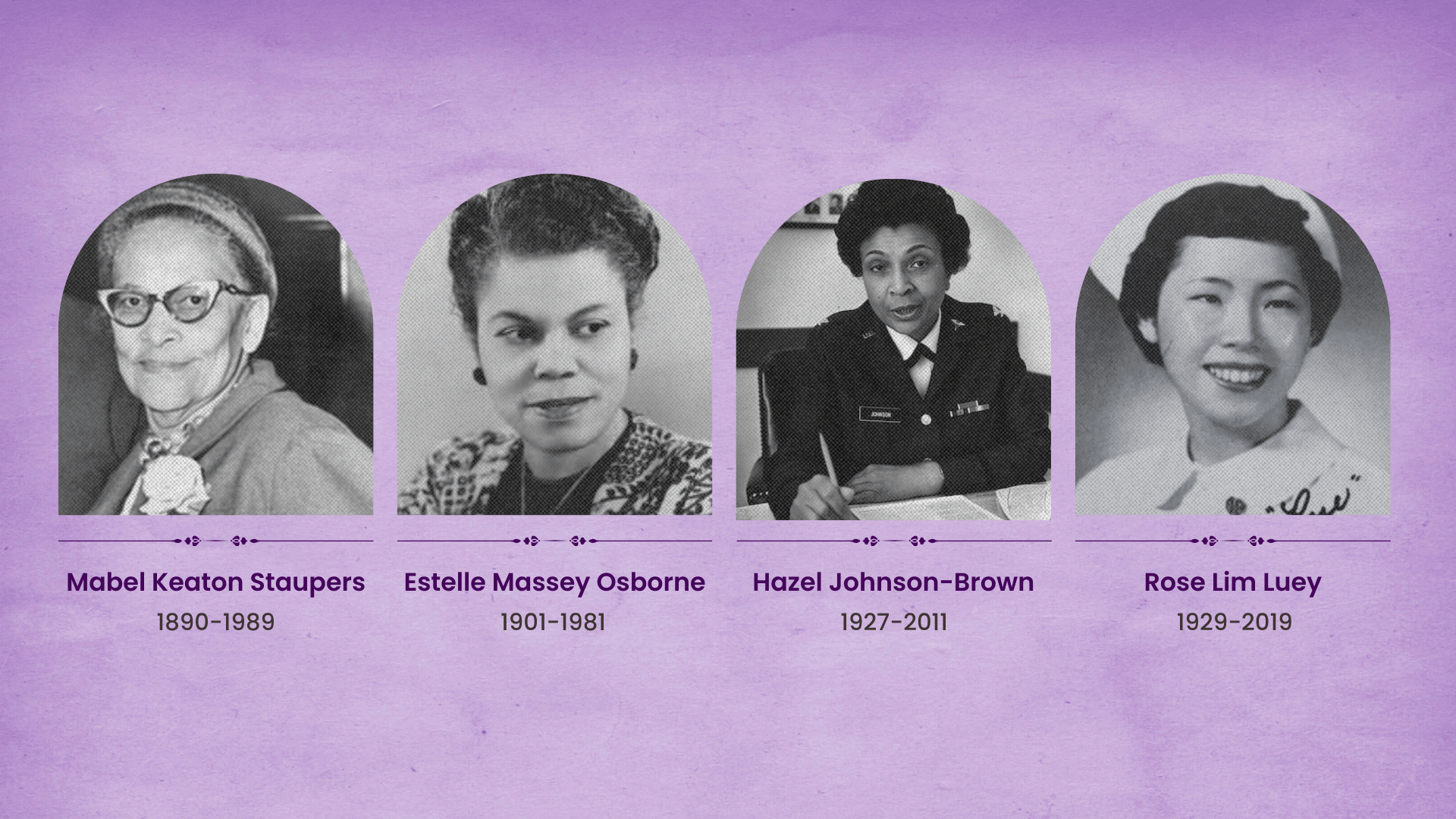
Hazel W. Johnson-Brown: Expanding Leadership in Military Healthcare
Hazel W. Johnson-Brown made history as the first Black woman to become a general in the U.S. Army and the first Black Chief of the Army Nurse Corps. But her impact went far beyond titles.
She advocated for equitable opportunities in military healthcare leadership and worked to ensure that nursing leadership reflected the diversity of the service members it supported. Her efforts strengthened leadership pipelines and expanded representation in decision-making roles.
Healthcare leadership diversity isn’t just symbolic, it improves outcomes, strengthens workforce stability, and builds trust within communities. Johnson-Brown helped make military healthcare more inclusive and structurally stronger for future generations.
Estelle Massey Osborne: Desegregating Nursing Education
Estelle Massey Osborne was one of the first Black nurses to earn a master’s degree and became a national advocate for desegregating nursing schools.
At a time when many hospitals and training programs excluded Black nurses, Osborne pushed for integration and equal access to education. She worked with national organizations to expand professional opportunities and remove discriminatory barriers.
By opening doors in nursing education, she strengthened the talent pipeline and improved the quality and diversity of the nursing workforce.
A sustainable healthcare system depends on access to education and professional advancement. Osborne helped ensure that the future of nursing would be broader, stronger, and more inclusive.
Mabel Keaton Staupers: Fighting for Equal Service in the Armed Forces
Mabel Keaton Staupers led the effort to integrate the U.S. Army Nurse Corps during World War II. At a time when qualified Black nurses were barred from serving, she advocated relentlessly for equal opportunity. Her work led to policy changes that permanently integrated the Nurse Corps.
By fighting for workforce inclusion during a national crisis, Staupers strengthened the country’s healthcare response capacity. Inclusion wasn’t just a civil rights issue; it was a healthcare readiness issue. Workforce equity improves system resilience. And Staupers understood that clearly.
Rose Lim Luey: Championing Immigrant Communities
Rose Lim Luey spent 65 years breaking barriers and building bridges in healthcare. One of the first Chinese American graduates from Samuel Merritt Hospital School of Nursing, she became a bilingual public health nurse and a founding member of Asian Health Services.
Luey understood the challenges immigrant families face in navigating the healthcare system. After the Vietnam War, she welcomed new arrivals at Oakland International Airport, providing care, guidance, and trust in their own language. Her culturally competent approach strengthened public health systems and improved outcomes for underserved communities.
Rose Lim Luey’s work shows that equity, inclusion, and cultural awareness aren’t just ideals; they’re essential to sustainable healthcare.
Why Equity Is Essential to Sustainable Healthcare
Health equity. Inclusive leadership. Workforce diversity. Equal access to education.
These aren’t side conversations in healthcare — they directly impact patient outcomes, staffing stability, and long-term system strength.
When nurses from diverse backgrounds are supported and promoted into leadership roles, healthcare organizations are better equipped to serve diverse communities. That strengthens public trust, improves care delivery, and builds a more sustainable healthcare infrastructure.
And nurses continue leading that work today, advocating for equitable staffing models, community outreach programs, and inclusive workplace cultures that support long-term workforce sustainability.
Economic & Workforce Sustainability: Strengthening the Profession for the Future
A sustainable healthcare system also depends on something nurses talk about every day: the workforce. Education standards. Professional autonomy. Emergency response systems. Career longevity. These leaders strengthened the nursing profession itself, ensuring it could grow, adapt, and support future generations.
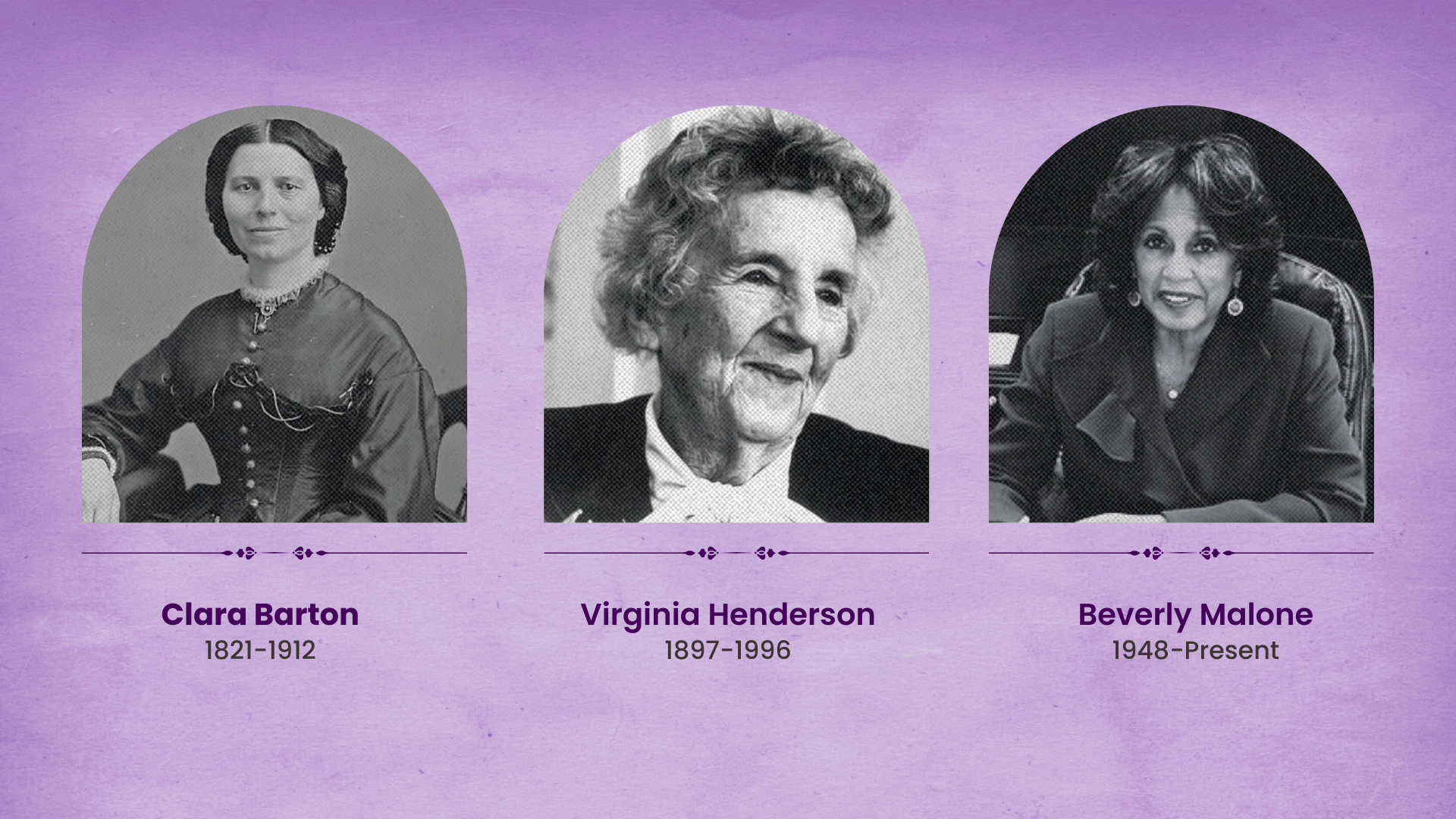
Clara Barton: Organizing Humanitarian Response Systems
Clara Barton founded the American Red Cross and transformed disaster response in the United States. She built structured systems for emergency relief, volunteer coordination, and crisis healthcare delivery.
Instead of ad hoc responses, she created organized frameworks that could be activated when communities needed them most. Modern disaster nursing, emergency preparedness programs, and coordinated humanitarian healthcare efforts all reflect her model.
Virginia Henderson: Defining the Role of the Nurse
Virginia Henderson helped define modern nursing theory and clarify the nurse’s role within healthcare teams. Her work emphasized patient independence, holistic care, and clearly defined professional standards. That clarity strengthened nursing education programs and improved interdisciplinary collaboration.
When roles are defined, and professional standards are strong, care delivery becomes more consistent and scalable, both critical to long-term healthcare system stability.
Dr. Beverly Malone: Advocating for Workforce Sustainability
Dr. Beverly Malone has been a leading voice in nursing workforce policy and global health leadership. Her work focuses on strengthening nursing education, improving workforce conditions, and advocating for policies that support nurse retention and advancement.
Burnout, staffing shortages, and retention challenges threaten healthcare sustainability today. Leaders like Malone highlight a critical truth: protecting the nursing workforce protects the healthcare system.
Frequently Asked Questions
What is the 2026 Women’s History Month theme?
The 2026 theme, “Leading the Change: Women Shaping a Sustainable Future,” honors women who transform systems for long-term equity, resilience, and impact across healthcare, education, and social services.
How have women nurses shaped sustainable healthcare?
Women nurses like Florence Nightingale, Lillian Wald, Mary Eliza Mahoney, and Rose Lim Luey improved sanitation, infection control systems, public health programs, and workforce equity — laying the foundation for resilient, sustainable healthcare systems that serve diverse communities.
Who are some influential women in nursing history?
Florence Nightingale, Hazel W. Johnson-Brown, Estelle Massey Osborne, Mabel Keaton Staupers, Rose Lim Luey, Clara Barton, and Virginia Henderson are just a few trailblazers who redefined nursing and strengthened healthcare systems.
Why is equity important in healthcare sustainability?
Equity ensures all patients receive high-quality care, and all nurses have access to education, professional growth, and leadership opportunities. Nurses like Rose Lim Luey show how culturally competent care and workforce inclusion strengthen healthcare for everyone.
How can nurses lead change today?
Nurses can lead by advancing infection prevention, supporting community health initiatives, promoting workforce diversity, and pursuing flexible career paths that reduce burnout while building long-term professional sustainability.
The Future: Nurses Still Leading Change
The women we’ve honored didn’t just improve patient care in their time. They strengthened healthcare systems so future nurses could build on their work.
Today’s nurses continue shaping a more sustainable future by:
Advancing infection prevention and patient safety
Leading community health initiatives
Advocating for staffing reform and safe workplace standards
Pursuing leadership and advanced practice roles
Seeking flexible career paths that reduce burnout
Sustainable healthcare isn’t only about infrastructure; it’s also about sustaining the people who deliver care.
Flexible scheduling models, diversified career opportunities, and modern workforce solutions help nurses build long-term, resilient careers. When nurses have greater autonomy and support, healthcare systems become stronger and more stable.
The theme of Women’s History Month 2026, Leading the Change: Women Shaping a Sustainable Future, couldn’t describe nursing more accurately.
For generations, nurses have led that change. And they still do.
Build Your Legacy in Nursing Today
The nurses we’ve celebrated didn’t just care for patients; they built systems that last. Today, nurses continue leading change in healthcare by shaping policies, improving patient outcomes, and building sustainable careers.
Ready to make an impact? Whether you’re looking for flexible schedules, per diem opportunities, or pathways to leadership, you can shape the future of nursing while advancing your own career.
Explore flexible nursing roles, grow your skills, and join a supportive nursing team that’s leading the change, just like the trailblazers we honor this Women’s History Month.