Why Is Self-Care Important for Nurses?


You work in an incredibly rewarding profession, but as you know, it’s tough. Long shifts on your feet, emotional exhaustion, and constant pressure to get things right can leave you drained. It’s easy to put your needs last, but taking care of yourself isn’t selfish. Prioritizing your mental health and well-being helps you stay strong, focused, and ready to give your best to every patient, every shift.
In this post, you’ll discover why self-care is important for nurses and simple, practical tips you can start using today to protect your energy, health, and well-being.
What Is Self-Care?
Self-care is the daily practice of attending to your physical, emotional, and mental needs—shaping your routines, relationships, and environment to support your overall well-being. Mindful self-care fosters awareness, enabling you to intentionally nurture yourself each day.
What Self-Care Means for Nurses
Self-care isn’t just about bubble baths or the occasional day off. It’s about the little things you do every day to protect your physical, mental, and emotional health. When you make self-care a priority, you reduce stress, prevent burnout, and stay in top form for yourself and the patients depending on you.
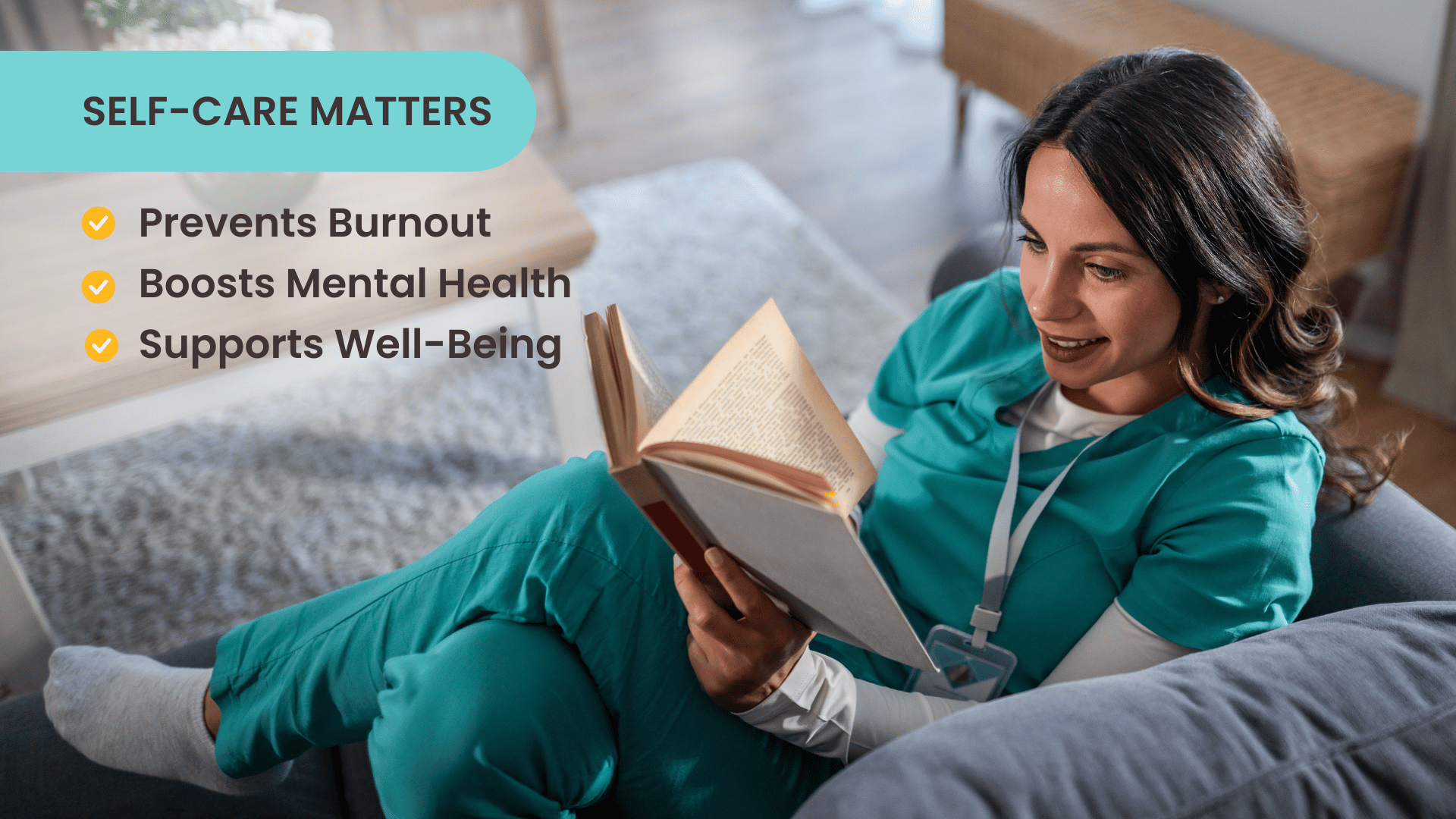
Why Self-Care Matters in Nursing
Self-care in nursing isn’t just a nice-to-have; it’s essential for staying strong, healthy, and effective on the job. When you take care of yourself, you protect your energy, your mental health, and your ability to provide the best care for your patients.
1. Prevents Nurse Burnout
You know the exhaustion that comes with back-to-back nursing shifts. Without self-care, that exhaustion builds up and leads to burnout. By taking time for yourself, you maintain your energy and keep your focus sharp.
2. Boosts Nurse Mental Health
Caring for patients can be emotionally draining. Mindfulness, journaling, or talking to someone you trust helps you process stress and maintain a positive mindset.
3. Supports Nurse Well-Being
Skipping meals, losing sleep, and sitting for hours can take a toll. Prioritizing nutrition, movement, and rest keeps you healthy and reduces the risk of injury or illness.

6 Practical Self-Care Tips for Nurses
Taking care of yourself doesn’t have to be complicated. These practical tips make it easier to protect your energy, manage stress, and stay healthy—so you can show up as your best self on every shift.
1. Set Boundaries at Work
Learn to say no to extra shifts or overtime when needed. Protect your time off to rest and recharge.
2. Prioritize Sleep and Nutrition
Stick to a regular sleep schedule and prioritize nutritious meals, especially during long shifts.
3. Move Your Body
Short workouts, stretching, or walking during breaks can help reduce stress and improve energy levels.
4. Practice Mindfulness or Meditation
Spend a few minutes each day on mindfulness techniques to refresh your mind and reduce stress.
5. Seek Support
Reach out to colleagues, friends, or a professional counselor when stress becomes overwhelming.
6. Work Flexible Schedules
Work when, where, and how often you want as a ShiftMed nurse. Download our nursing jobs app on the App Store or Google Play to protect your peace and make it easier to maintain a self-care routine.

How Habits Shape Nurse Self-Care
Your daily habits play a significant role in how well you care for yourself. Many behaviors, such as food choices or exercise routines, form early and are often difficult to change. Environmental factors, such as limited access to safe exercise spaces or high-stress work environments, can make healthy choices even harder.
Habits and goals work together: your goals give direction and motivation, while habits create automatic patterns that make those goals easier to sustain. For example, if you consistently make time for exercise, it becomes a habit that supports your overall health, even on stressful days.
Stress, fatigue, and distractions can interfere with self-care, making it tempting to rely on old habits—even if they don’t serve you. It’s also human nature to prioritize immediate comfort over long-term benefits, like skipping a healthy meal for convenience or staying late instead of resting.
By understanding how habits form and how goals guide them, you can create self-care routines that stick—small, consistent actions that support your well-being, even during demanding shifts.
3 Helpful Nurse Self-Care Resources
Explore these tools and resources to support your well-being, identify areas for growth, and build healthy self-care habits that fit into your daily life.
1. Healthy Nurse, Healthy Nation
A free wellness program for nurses that supports your well-being across six key areas: mental health, physical activity, nutrition, rest, quality of life, and safety.
2. Mindful Self-Care Scale Assessment
A 33-item scale that measures your mindful self-care, highlights strengths and areas to improve, and offers strategies to boost your well-being. It covers 10 self-care domains, from nutrition and exercise to spiritual practices.
3. Self-Care Wheel
A practical self-care tool for maintaining balance across six areas, helping you spot gaps and build healthy habits into your daily routine.
Self-Care for Nurses: The Bottom Line
Self-care for nurses isn’t optional—it’s essential. By taking care of your physical, mental, and emotional well-being, you remain strong, resilient, and prepared to deliver the best possible care. Start small, stay consistent, and don’t be afraid to use tools that help you work smarter, not harder.