What Is Open Shift Management in Healthcare? Best Practices, Policies, and Technology


Open shifts often feel like unavoidable disruptions, driving overtime, increasing premium labor spend, and stretching clinical teams thin. But what if those same coverage gaps could become a controlled, data-driven lever for improving margins, strengthening retention, and protecting patient care? Open shift management gives health systems a structured way to move from reactive scheduling to a proactive workforce strategy built for efficiency and stability.
What Is an Open Shift in Healthcare?
An open shift in healthcare is a scheduled role that hasn’t been filled. It’s a small gap that can create big operational headaches. For hospital and health system leaders, managing these shifts strategically means controlling costs, keeping clinicians engaged, and maintaining high-quality patient care. While it may seem like a routine scheduling issue, open shifts ripple across hospital operations, affecting everything from patient safety to workforce efficiency.
These unfilled shifts often arise unexpectedly, whether due to last-minute call-outs, workforce shortages, or gaps in planning. For nurses and other frontline staff, they can mean longer hours, increased stress, and uneven workload distribution. From an executive perspective, open shifts signal opportunities to optimize workforce planning, scheduling processes, or staffing policies to reduce reliance on overtime and agency labor.
Forward-thinking health systems approach open shift management as a strategic lever. By combining clear policies, predictive staffing insights, and technology-enabled scheduling, hospitals can turn what used to be a reactive scramble into a proactive, measurable part of workforce management. Properly managed, open shifts keep hospitals running while simultaneously improving clinician satisfaction, reducing labor costs, and protecting patient care quality.

4 Common Causes of Open Shifts in Hospitals
Open shifts typically arise from a mix of predictable and unexpected factors, including:
Last-minute call-outs due to illness or personal emergencies.
Planned absences, such as vacations or leaves of absence.
Workforce turnover hasn’t been fully addressed.
Systemic issues, such as outdated scheduling processes or limited visibility into staff availability.
More than operational headaches, open shifts signal underlying issues in workforce planning, talent management, and resource allocation. Identifying patterns over time enables hospitals to proactively address gaps rather than constantly react to coverage issues.
5 Ways Open Shifts Affect Clinicians and Patient Care
Even a single unfilled shift can ripple through hospital operations, impacting clinicians and patients in several ways, including:
Increased workload and fatigue for nurses and frontline staff.
Higher risk of burnout, which can affect retention and morale.
Potential delays or errors in patient care when teams are stretched thin.
Increased reliance on overtime or agency labor, driving up labor costs.
Impact on patient satisfaction and safety, potentially affecting hospital reputation.
These effects highlight that open shifts are more than scheduling challenges; they’re strategic signals that must be addressed to help hospitals maintain operational efficiency, protect workforce well-being, and ensure consistent, high-quality patient care.
Recommended Resource: Access the 2026 Open Shift Management Report and explore the multi-billion-dollar cost opportunity available to forward-thinking health systems.

Why Open Shift Management Matters in Healthcare
Open shifts have real consequences for hospitals, staff, and patients. Managing them effectively is critical for health system leaders who need to balance cost control, workforce engagement, and quality of care.
Open shift management matters by allowing leaders to focus on:
Cost Control: Avoid overtime and premium staffing costs due to unfilled shifts.
Workforce Retention: Reduce fatigue and burnout to keep morale high and turnover low.
Patient Safety: Ensure timely care, minimize errors, and maintain satisfaction.
Regulatory Compliance: Meet staffing ratios, labor laws, and accreditation standards.
Operational Efficiency: Fill shifts proactively to prevent last-minute disruptions.
Hospitals and health systems that approach open shifts systematically, combining clear policies, predictive planning, and technology-enabled solutions, can reduce costs, retain talent, and maintain high-quality patient care, turning what used to be a recurring challenge into a measurable advantage.
3 Strategies Hospitals Use to Manage Open Shifts
Managing open shifts effectively requires a combination of smart policies, operational processes, and technology tools. Forward-thinking hospitals treat open shifts as opportunities to improve efficiency, protect clinicians, and maintain high-quality patient care.
Best practice strategies include:
1. Establishing Flexible Employment Options
Offering a mix of employment options gives hospitals the flexibility to meet staffing needs and operational demands. By building a layered workforce, including core staff, PRN tiers, float pools, and access to local on-demand or per diem clinicians, schedulers can fill every shift strategically, adapt to fluctuating demand, and maintain high-quality patient care without overburdening the team.
When offering flexible employment options, it’s essential to set clear eligibility rules. Define who can claim each shift based on credentials, unit experience, and availability. Clear rules protect patient safety, ensure the right clinician is in the right role, and maintain high standards of care. They also promote fairness and transparency among staff, reducing confusion or disputes and building trust in the scheduling process.
2. Integrating Technology for Smarter Scheduling
Technology transforms open shift management by enabling hospitals to publish shifts in real time, match them automatically with qualified clinicians, and fill gaps faster. By replacing manual processes such as phone calls and spreadsheets, digital platforms make scheduling more efficient, reliable, and transparent.
Modern platforms automate core staffing tasks, including credential verification, compliance tracking, and role-based matching, ensuring the right clinician fills each shift while reducing administrative burden on scheduling teams.
Mobile apps and real-time notifications further streamline the process. Clinicians can see available shifts instantly, filter by location or specialty, and claim shifts that fit their schedule directly from their phones, helping hospitals reduce last-minute gaps and minimize reliance on overtime or premium labor.
Beyond scheduling, these platforms provide data and insights that support smarter workforce planning. Leaders can track fill rates, spot recurring coverage challenges, and adjust staffing strategies based on demand trends.
Over time, this leads to lower labor costs, improved operational efficiency, and higher clinician satisfaction, turning open shift management from a reactive task into a strategic advantage.
3. Leveraging Workforce Analytics and Reporting
Workforce analytics give leaders a real-time view of key metrics such as fill rates, time-to-fill, staff engagement, cost per shift, and unfilled shifts. This visibility allows executives to see exactly how coverage is performing across the organization.
Rather than reacting after gaps appear, leaders can anticipate staffing challenges, spot trends early, and make data-driven decisions to keep units fully covered. Analytics highlight which teams are stretched, which shifts are hardest to fill, and where labor costs are increasing—all in one place.
The outcome is a more predictable and efficient workforce strategy: fewer last-minute crises, reduced reliance on overtime or premium labor, and scheduling that supports clinician well-being and high-quality patient care. Workforce management shifts from a reactive scramble to a controlled, strategic process.
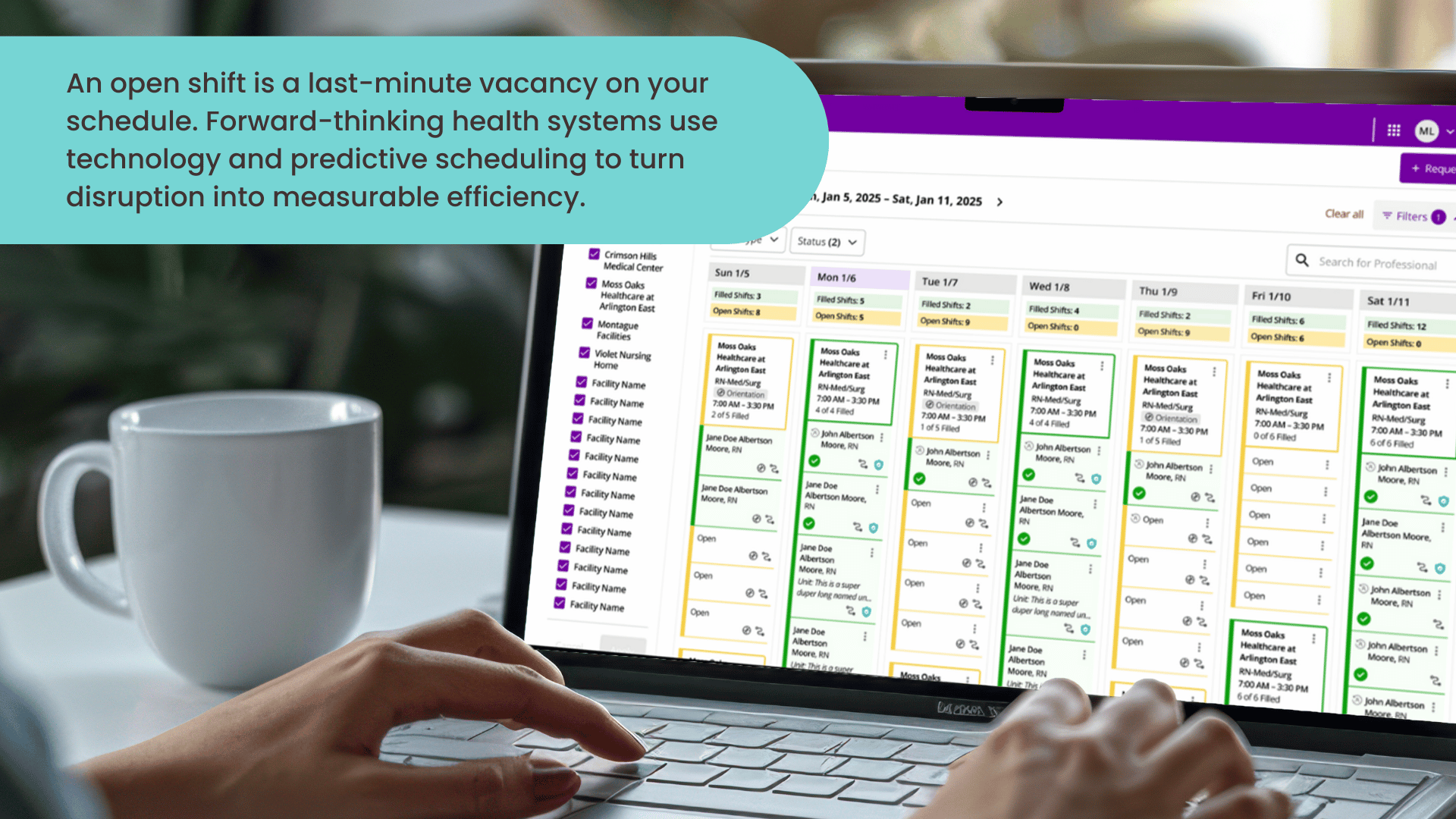
Must-Have Open Shift Management Technology
Technology is transforming how hospitals manage open shifts, turning what used to be a reactive scramble into a proactive, efficient process. By leveraging digital tools, such as ShiftMed's open shift management platform, health systems can match workforce needs with available talent quickly, reduce errors, and improve overall performance.
Key technology solutions include:
Mobile Self-Service for Clinicians: Nurses and allied health professionals can claim shifts in real time via a mobile app, giving them flexibility while filling gaps faster and reducing manual scheduling.
Credential-to-Shift Matching: Shifts are automatically matched with qualified clinicians, expanding the available workforce while ensuring compliance across units and locations.
Scheduling-Integrated Marketplaces: On-demand, local workforce marketplaces integrate with existing schedules to fill open shifts quickly with nearby, credentialed clinicians.
Automated Shift Matching: AI and rules-based logic pair open shifts with the right clinicians, cutting manual work, reducing last-minute gaps, and improving operational efficiency.
When implemented strategically, these digital solutions help hospitals fill shifts faster, reduce reliance on overtime and premium labor, improve workforce satisfaction, and maintain high-quality patient care. For executives, investing in technology brings convenience and creates a measurable impact on cost, efficiency, and workforce stability.
Frequently Asked Questions About Open Shift Management
1. How do open shifts work in healthcare?
Open shifts are scheduled roles that remain unfilled. Hospitals manage them through a combination of policies, flexible scheduling, and technology to ensure coverage, reduce costs, and maintain patient safety.
2. Why are open shifts a concern for health system leaders?
Unfilled shifts can drive overtime, premium pay, and clinician burnout. They also impact patient care quality and regulatory compliance. Proactively managing open shifts helps leaders control labor expenses, protect workforce well-being, and maintain operational continuity.
3. What strategies help fill open shifts effectively?
Effective strategies include layered workforce models (core staff, PRN tiers, float pools), clear eligibility rules, shift bidding systems, and technology-enabled scheduling. These approaches allow hospitals to fill gaps efficiently while keeping nurses and allied health professionals engaged.
4. How does technology improve open shift management?
Digital platforms and mobile apps automate scheduling, match qualified clinicians to shifts, track compliance, and provide real-time analytics. This reduces administrative work, minimizes last-minute coverage gaps, and supports data-driven workforce planning.
5. What metrics should leaders track for open shift performance?
Key metrics include fill rates, time-to-fill, clinician participation, cost per shift, and unfilled shifts. Tracking these allows executives to identify trends, anticipate challenges, and make proactive staffing decisions.
6. How can hospitals maintain compliance while managing open shifts?
Open shift management tools can enforce credential-to-shift matching, monitor staffing ratios, and integrate rules-based logic to ensure only qualified clinicians fill shifts, keeping units compliant with labor laws and accreditation standards.
Turn Your Open Shifts Into a Strategic Advantage
By proactively managing open shifts, your hospital or health system can reduce costs, maintain compliance, and keep nurses and allied health professionals engaged—all while ensuring patients receive consistent, high-quality care.
Effective open shift management turns what was once a reactive challenge into a predictable, strategic part of workforce planning.
Schedule a free workforce consultation to see how our Open Shift Management (OSM) platform can easily help you cut premium labor costs, safeguard margins, and align shifts with clinician preference.