How to Lead a Multi-Generational Nursing Workforce


In today’s healthcare environment, nurse leaders must navigate a multi-generational nursing workforce, balancing the needs of experienced professionals with those of early-career nurses. Implementing targeted nursing leadership strategies allows leaders to harness the strengths of every generation and create a collaborative, high-performing team.
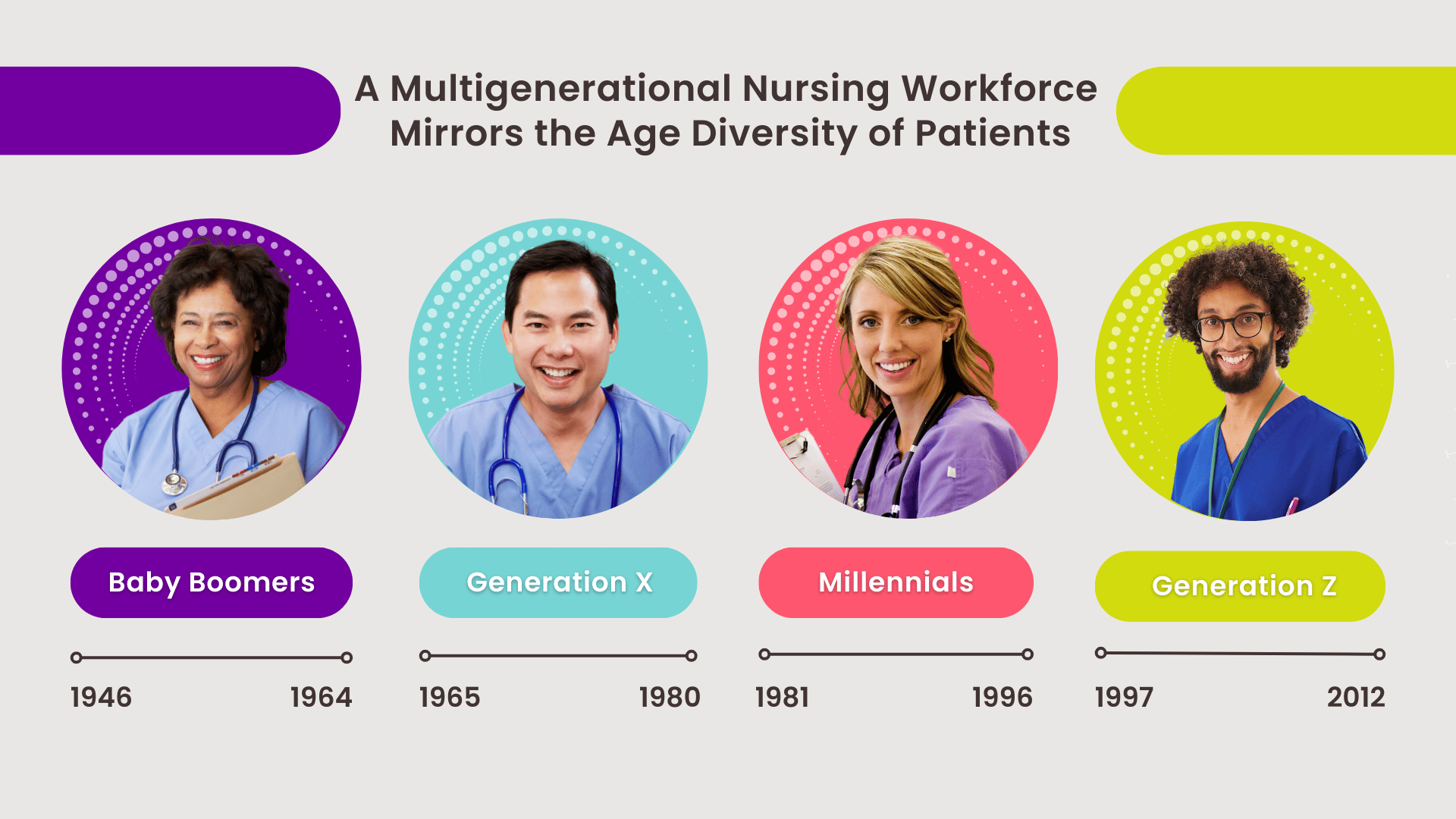
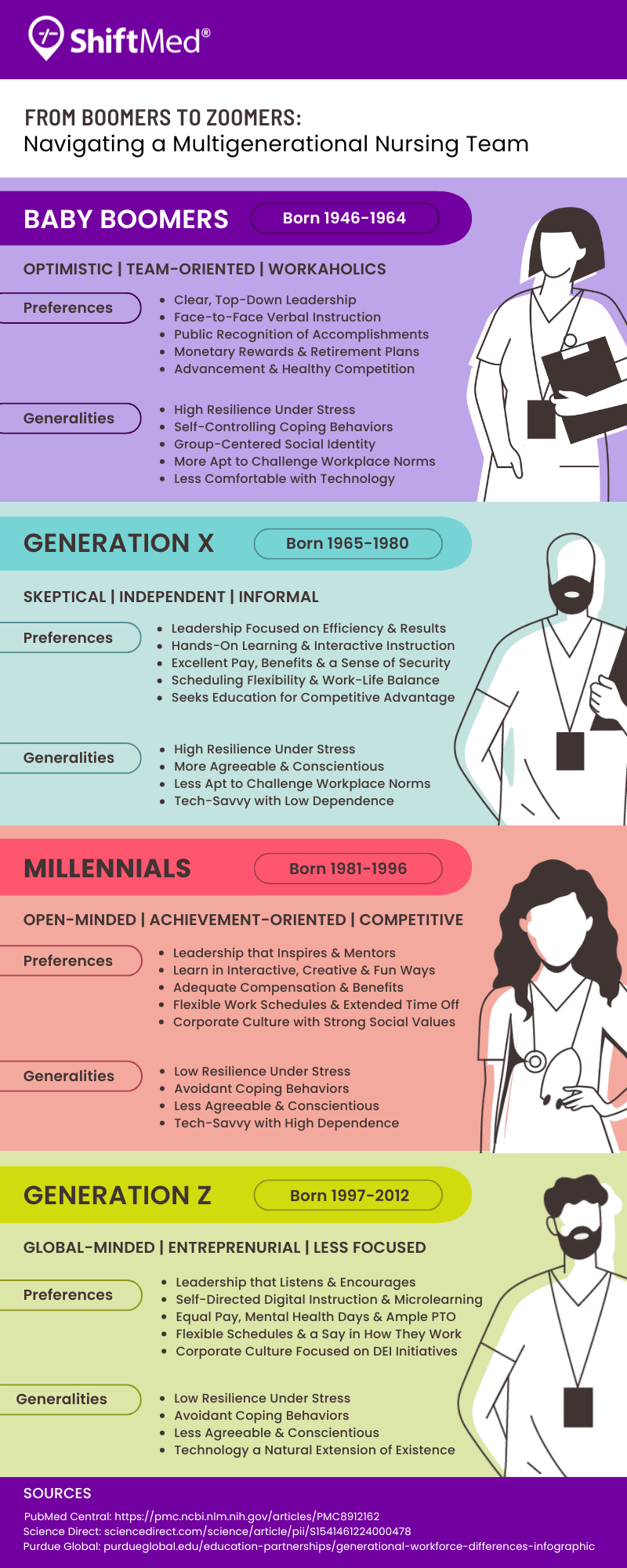
Modern nursing teams often reflect four generational cohorts—Baby Boomers, Generation X, Millennials (Generation Y), and Generation Z—each shaped by unique life experiences and historical events. Recognizing and addressing these differences is critical to reducing generational conflicts and fostering a collaborative work environment.
A generational cohort refers to people born around the same time who share pivotal life experiences—things like historical events, cultural icons, entertainment, and early career moments. These shared experiences shape their perspectives and attitudes. While knowledge and skills grow with age, the core values and behaviors formed during their early years tend to stick, resulting in each generation having unique values and work habits.1
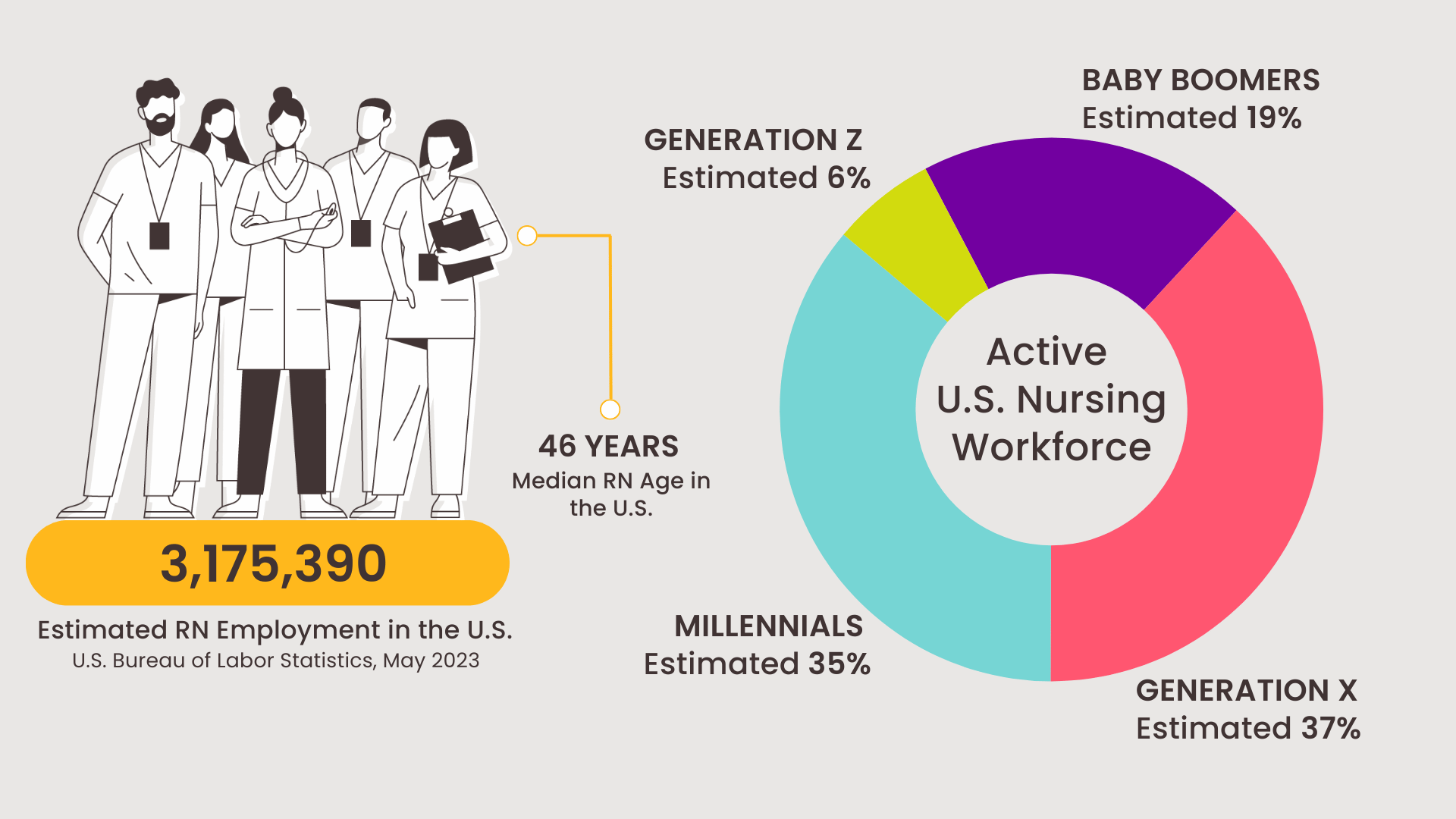
Baby Boomers make up about 19% of today's nursing workforce, but their numbers slowly shrink yearly. Meanwhile, Generation X and Millennials lead the charge, making up 37% and 35% of the nursing workforce, respectively. Gen Z is making its mark, too, growing steadily to about 6%.2
Understanding the Generational Differences in Nursing
Creating a workplace that values each team member's unique perspective is essential for boosting commitment and job satisfaction. By recognizing and respecting the differences within a multigenerational nursing workforce, nurse leaders cultivate a sense of belonging that inspires everyone to give their best.1
Keep in mind, however, that there's a fine line between segmenting and stereotyping generations, which is why you should avoid putting nurses into boxes just because of their age. Every nurse brings their personality, experiences, and life journey to the table, making each one uniquely their own—no matter their generation.1
Baby Boomer Characteristics
Baby Boomer nurses are known for their unbeatable work ethic and dedication. They value traditional face-to-face communication but have embraced modern tech-driven ways to stay connected. Growing up in a two-parent household with clear roles—mom at home and dad as the authority figure—they tend to thrive in team settings. These nurses take pride in their accomplishments, often linking their self-worth to their work, which means they're motivated by recognition and the perks that come with hard work. While they've earned the "workaholic" label, it's all about pride and passion for what they do.1
Gen X Characteristics
Generation X nurses are quickly becoming the backbone of healthcare organizations. With their practical problem-solving skills, they're perfect for tackling clinical challenges and ensuring quality care. These nurses are often seen as the "latchkey kids" of dual-career parents, growing up with independence and self-reliance. They don't get overly attached to leaders or institutions; they view education as a tool to stay competitive. They're all about balance—valuing both personal and professional life—and while they may show signs of burnout, they provide a wealth of experience. When it comes to knowledge-sharing, they can be a bit reserved, but when they commit, they're all in.1
Millennial Characteristics
Millennial nurses are optimistic and career-driven and value honesty, accomplishments, and career advancement. They're self-sufficient but thrive in team settings, valuing mentorship, feedback, and collaboration. These nurses believe hard work deserves recognition. But what truly sets them apart is their deep desire to help others, seek work-life balance, and have a say in their schedules. They're not just here to work—they want to be part of the decision-making process, much like they've always been in their families. In short, Millennial nurses are all about making a difference, balancing life and work, and using their voices to shape the future of healthcare.1
Gen Z Characteristics
Generation Z nurses grew up in a world of challenges—economic struggles, public violence, and uncertainty—but they've turned these tough times into strengths. As a result, they're pragmatic, cautious, and highly focused on securing their emotional, physical, and financial well-being. When they champion a cause, they're more likely to act through social media, showing their support in an impactful and modern way. This generation is incredibly diverse and has grown up in a more inclusive world, which makes them open-minded and comfortable with differences. In short, Gen Z is about progress, inclusion, and using their voices (and screens) to create change.3
Engaging a Multi-Generational Nursing Team
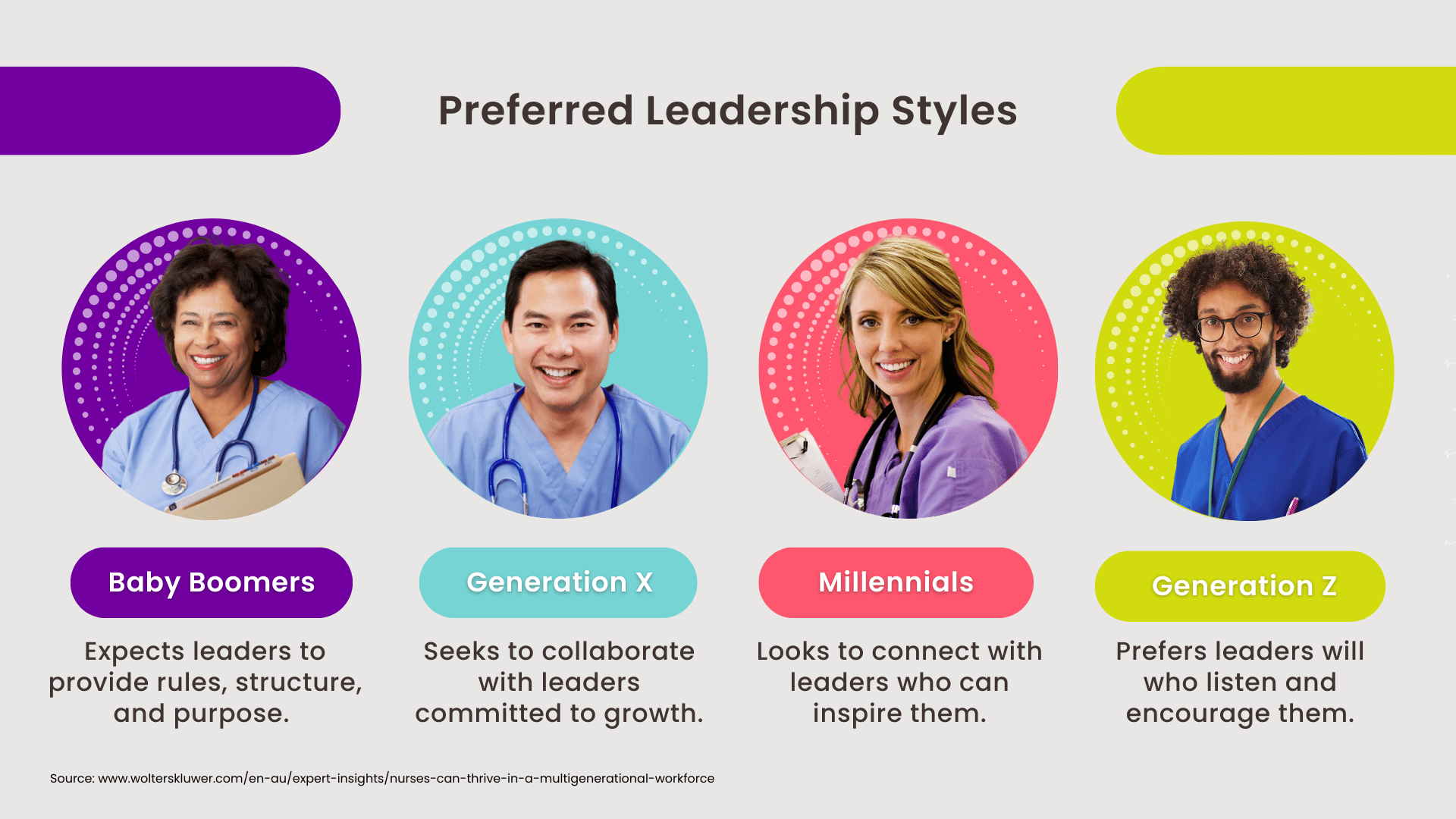
Engaging a multi-generational nursing workforce requires flexible, thoughtful nursing leadership strategies that meet the distinct needs of each generation. Baby Boomers value mentorship and clear direction, Gen X nurses thrive with autonomy and results-driven guidance, Millennials respond to collaborative leaders who provide growth and feedback, and Gen Z nurses connect with tech-savvy, coaching-focused leaders who prioritize flexibility and wellness. By tailoring leadership approaches, nurse leaders can engage every generation, reduce turnover, and build high-performing teams that deliver exceptional patient care.
Building Resiliency Among Multi-Generational Nurses
Understanding generational differences in how nurses cope with stress and build resilience is critical for nurse leaders. By recognizing these distinct needs, you can create tailored coaching and retention strategies that support each nurse's unique strengths, helping to foster a more resilient and satisfied workforce.2
1. Stress Management
While individual strategies can help nurses manage their stress, support from nurse leadership is crucial. Nurses need a supportive environment to thrive, one that acknowledges the systemic challenges they face and provides resources to help them navigate these pressures.
A study examining generational differences in resilience, stress management, and self-efficacy during the COVID-19 pandemic revealed that Baby Boomers and Generation X demonstrated higher resilience than other generations. In contrast, Millennial nurses reported experiencing the highest levels of stressors and perceived stress, often turning to escape or avoidance coping strategies. On the other hand, Baby Boomers were more likely to use self-controlling behaviors to manage stress.2
Nurse leaders can support their teams in managing stress by implementing various strategies, such as providing access to mental health services, implementing wellness initiatives, facilitating peer support groups, and ensuring appropriate nurse-to-patient ratios.
2. Flexible Scheduling
Flexible scheduling is a great way to build resilience within the multi-generational nursing workforce. It helps improve work-life balance, a benefit that nurses across all generations can appreciate.
Millennial and Gen Z nurses value workplace flexibility highly, making hospitals with flexible schedules more attractive for retaining younger nurses as Baby Boomer nurses begin to retire.
However, flexibility is more than just appealing to the younger generations. By offering flexible shifts to Generation X and Baby Boomer nurses, hospitals can retain these experienced professionals, which is crucial for mentoring younger staff and maintaining high-quality care.
According to a nurse survey conducted by the American Nurses Foundation in October 2023, current and previously retired nurses said they would consider returning to the bedside if they could set their schedules (45%), serve as an educator (34%), or mentor nurses (31%).
Another nursing study released by the American Association of Critical-Care Nurses in 2022 found that many nurses leave hospitals due to burnout from long hours, while others walk away because of rigid schedules. The insight from this study underscores a critical truth within the nursing profession: the need for flexible scheduling transcends age and experience levels.
Establishing a Positive Work Environment for Diverse Nursing Teams
By recognizing and addressing the diverse needs of a multi-generational nursing team, nurse leaders can create a more positive and collaborative work environment that benefits staff and patients. Here are three ways to establish a positive work environment for diverse nursing teams:
1. Intergenerational Nurse Communication
Effective communication is critical in nursing, especially when leading a multi-generational team. Nurse leaders must optimize communication across generational lines to ensure safe, efficient patient care and smooth resolution of administrative issues. One of the most impactful ways to improve communication is by personalizing messages to align with each generation's preferences.2
For instance, Baby Boomers may respond better to voicemail messages, while Gen Z nurses are more likely to engage with text messages. Understanding these preferences and adjusting communication methods for each generation can foster better engagement and reduce misunderstandings.2
Setting clear expectations around unit-level or group communications is essential. Nurse leaders must establish guidelines on communication channels for different messages—email, text, or even paper—to ensure everyone is on the same page. Equally important is holding team members accountable for regularly checking these channels to stay informed and involved.2
2. Employment Benefits
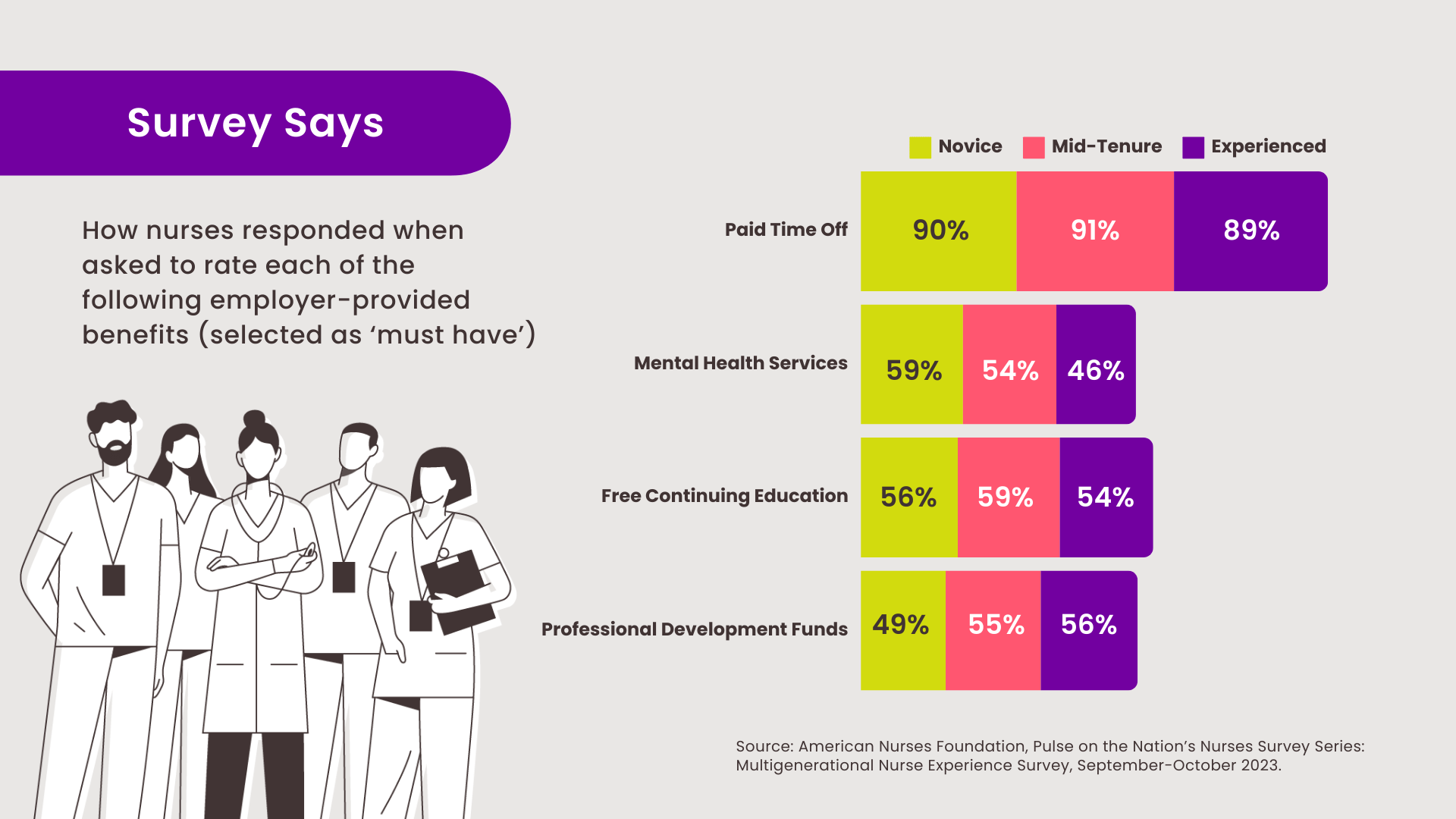
The traditional "one-size-fits-all" benefits model no longer resonates with multi-generational nursing teams.2 Here's a breakdown of benefits preferred by different nursing generations: 4
Baby Boomer Nurses
Boomer nurses often prioritize stability, security, and recognition over perks and flexibility.
Retirement & Pension Plans
Long-term Care Insurance
Lifetime Income Solutions
Recognition Programs
Generation X Nurses
Gen X nurses typically value work-life balance and practical professional growth.
Flexible Scheduling & PTO
Supplemental Insurance
Full-Service Employee Assistant Programs
Professional Development
Generation Y Nurses
Gen Y nurses typically want development, flexibility, and purpose-driven perks that support their personal and professional life.
Flexible Scheduling & PTO
Mentorship & Career Growth Programs
Wellness Perks
Student Loan Repayment Assistance
Generation Z Nurses
Gen Z nurses typically prioritize growth, mentorship, flexibility, and social values more than traditional benefits.
Flexible Scheduling & Work-Life Balance
Rapid Career Advancement Opportunities
Mentorship Programs & Frequent Feedback
Diversity, Equity & Inclusion Initiatives
3. Professional Growth Opportunities
Generational differences in learning styles can significantly influence the nursing workforce’s continuing education and professional development. To effectively meet the needs of different nurse generations, hospitals must evolve their approach to continuing education, ensuring it aligns with each generation’s diverse learning preferences.
Baby Boomers, who grew up when lectures were the norm, are accustomed to traditional classroom settings. However, Millennials and Generation Z have shifted the landscape, favoring interactive and dynamic learning experiences.2
Generation Z, in particular, thrives on hands-on learning and observation, preferring to dive into real-world scenarios rather than sitting through lengthy presentation slides. With shorter attention spans, Millennials and Generation Z benefit from bite-sized learning sessions and microlearning, which cater to their fast-paced, tech-savvy approach to mastering new concepts.2
Leading a Multi-Generational Nursing Workforce Conclusion
Overall, a multi-generational nursing workforce reflects the diverse age range of the patients they serve, blending the wisdom of experience with the vitality of fresh perspectives. This combination enhances the delivery of well-rounded, compassionate care.
By embracing the unique qualities of each generation, nurse leaders can create an inclusive environment where all team members feel valued and motivated. Furthermore, by bridging generational differences and leveraging individual strengths, nurse leaders pave the way for a more cohesive, high-performing workforce that excels in patient care.
Download our flexible nurse scheduling white paper for deeper strategy.
Sources
1 Rollan S, Siles J. Nursing Professionals within the Intergenerational Context during the 20th and 21st Centuries: an Integrative Review. Invest. Educ. Enferm. 2021; 39(3): e14. https://pmc.ncbi.nlm.nih.gov/articles/PMC8912162
2 Todd E. Tussing, Esther Chipps, Joni Tornwall, Generational Differences in the Nursing Workforce: Strategies for Nurse Leaders, Nurse Leader, Volume 22, Issue 5, 2024, Pages 602-608, ISSN 1541-4612. https://www.sciencedirect.com/science/article/pii/S1541461224000478
3 Jennifer Chicca, MS, RN, and Teresa Shellenbarger, PhD, RN, CNE, ANEF, A New Generation of Nurses Is Here, American Nurse Today, Volume 14, Issue 2, February 2019, https://www.myamericannurse.com/wp-content/uploads/2019/02/ant2-GenZ-117.pdf
4 Children's Hospital Association, These Are the Employee Benefits Each Generation Wants, August 2023, https://www.childrenshospitals.org/news/childrens-hospitals-today/2023/08/these-are-the-employee-benefits-each-generation-wants