Why Healthcare Recruitment Challenges Cost Hospitals Millions


Hospital leaders open dashboards every day and see the same problem: key clinical positions are still unfilled, recruitment costs keep climbing, and turnover is on the rise. Traditional methods like mass job postings, generic outreach, and rigid schedules once worked. Now they no longer meet the needs of today’s competitive labor market.
This is more than a workforce problem. It’s a strategic and financial challenge. Hospitals are spending more than ever on recruitment, but the return on that investment is disappointing. Clinicians now expect flexibility, autonomy, and optionality. Hospitals that fail to meet these expectations risk losing top talent and wasting millions in recruiting spend.
Across the industry, hospitals face healthcare recruitment challenges unlike any they have faced before. For CNOs and CHROs, the critical question is not whether to rethink talent acquisition but how quickly they can transform strategies to attract, retain, and engage the clinicians who drive high performance.
The Hidden Costs of Outdated Recruitment Practices
Does your recruitment team spend months posting jobs, attending career fairs, and coordinating with agencies, only to see key positions remain empty? Each vacancy triggers a ripple effect. Patient care is stretched, clinical teams are overburdened, and operational efficiency suffers.
Traditional recruitment methods often fail to deliver meaningful results. Hospitals are left with low healthcare recruitment ROI and a growing talent gap. High-performing health systems can no longer accept this inefficiency. They need data-driven strategies that maximize ROI while attracting and retaining top clinicians.
Recruitment Spend Without Return
Traditional hospital recruiting costs add up fast. Posting fees, agency commissions, and the time spent screening candidates can exceed $20,000 per hire. Often, the clinicians hired are not the right fit. The result is wasted budget and time, both of which directly affect patient care and operations.
Turnover and the Recruitment Gap
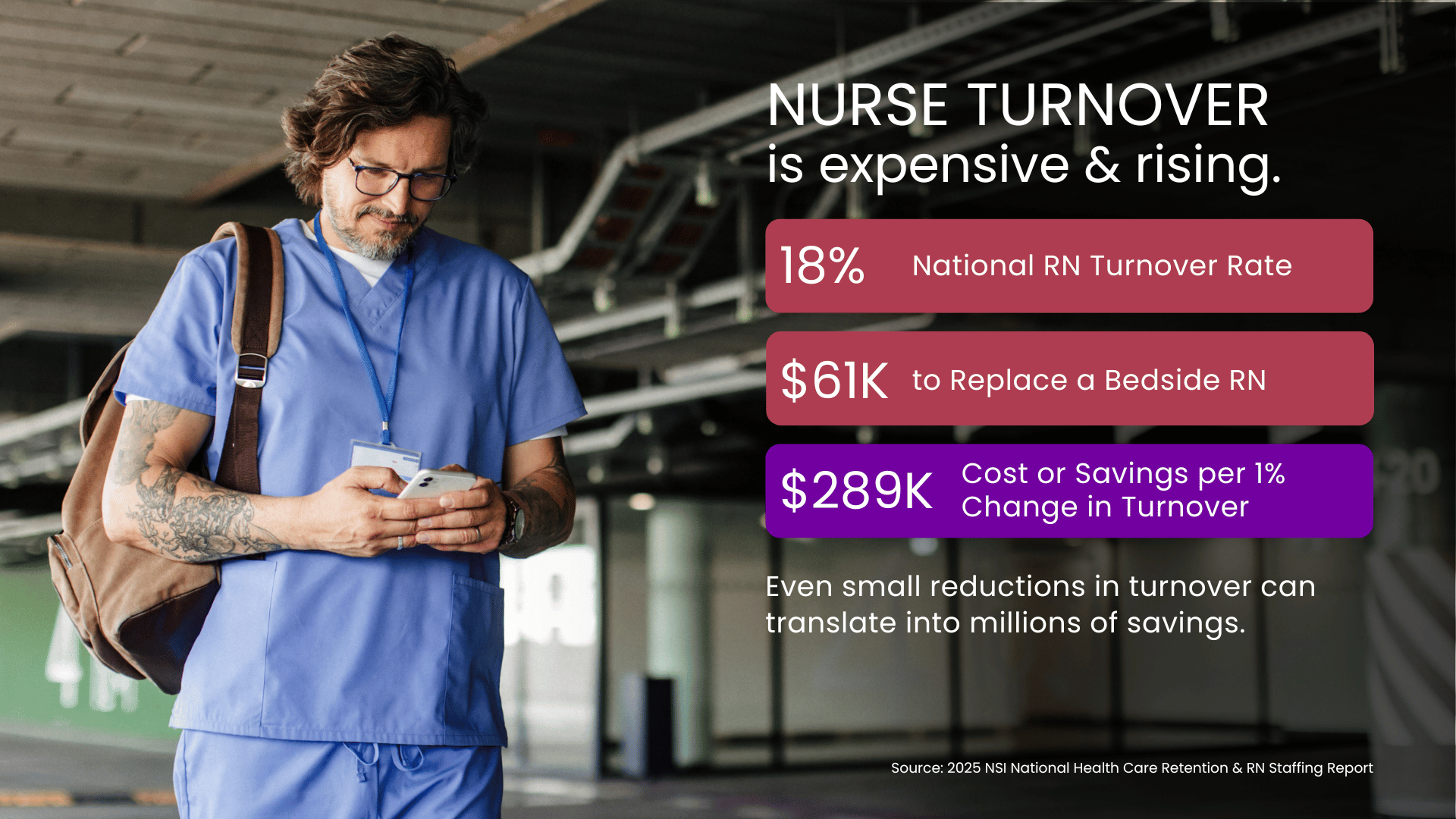
Outdated hiring practices also contribute to high clinician turnover. When new hires leave early due to rigid schedules or misaligned expectations, hospitals incur the costs of replacements and disruptions to team cohesion and patient care quality. Some studies estimate that replacing a single nurse can cost anywhere from $44,000 to $61,000, highlighting the strategic consequences of failing to modernize recruitment.
Clinicians Expect Flexibility, Autonomy, and Optionality
The expectations of today’s clinicians have changed dramatically. Traditional schedules, fixed shifts, and rigid hierarchies no longer meet their needs. Modern clinicians want flexible work schedules, autonomy in clinical decision-making, and the ability to choose how and where they provide care, whether on-site, hybrid, or via telehealth.
These preferences directly affect hospital performance. Flexible schedules reduce burnout and increase job satisfaction, thereby improving retention and maintaining consistent patient care. Autonomy allows clinicians to apply their expertise fully, resulting in fewer errors and better patient outcomes. Optional work locations expand the talent pool, helping hospitals attract clinicians who might otherwise look elsewhere.
Shift in Workforce Expectations
Healthcare workforce trends are clear. Clinicians now value work-life balance, self-scheduling, and hybrid roles. Hospitals offering these options see stronger engagement, lower turnover, and a competitive advantage in attracting top talent. Satisfying these preferences is a strategic necessity for C-suite leaders.
Why Traditional Recruiting Misses the Mark
Standard hospital hiring strategies—posting jobs, screening resumes, and conducting interviews—fail to communicate culture, career growth, and flexibility. High-performing hospitals are now using personalized outreach, data-driven targeting, and flexible work models to engage and retain top clinicians.
The ROI of Modern Recruitment Strategies
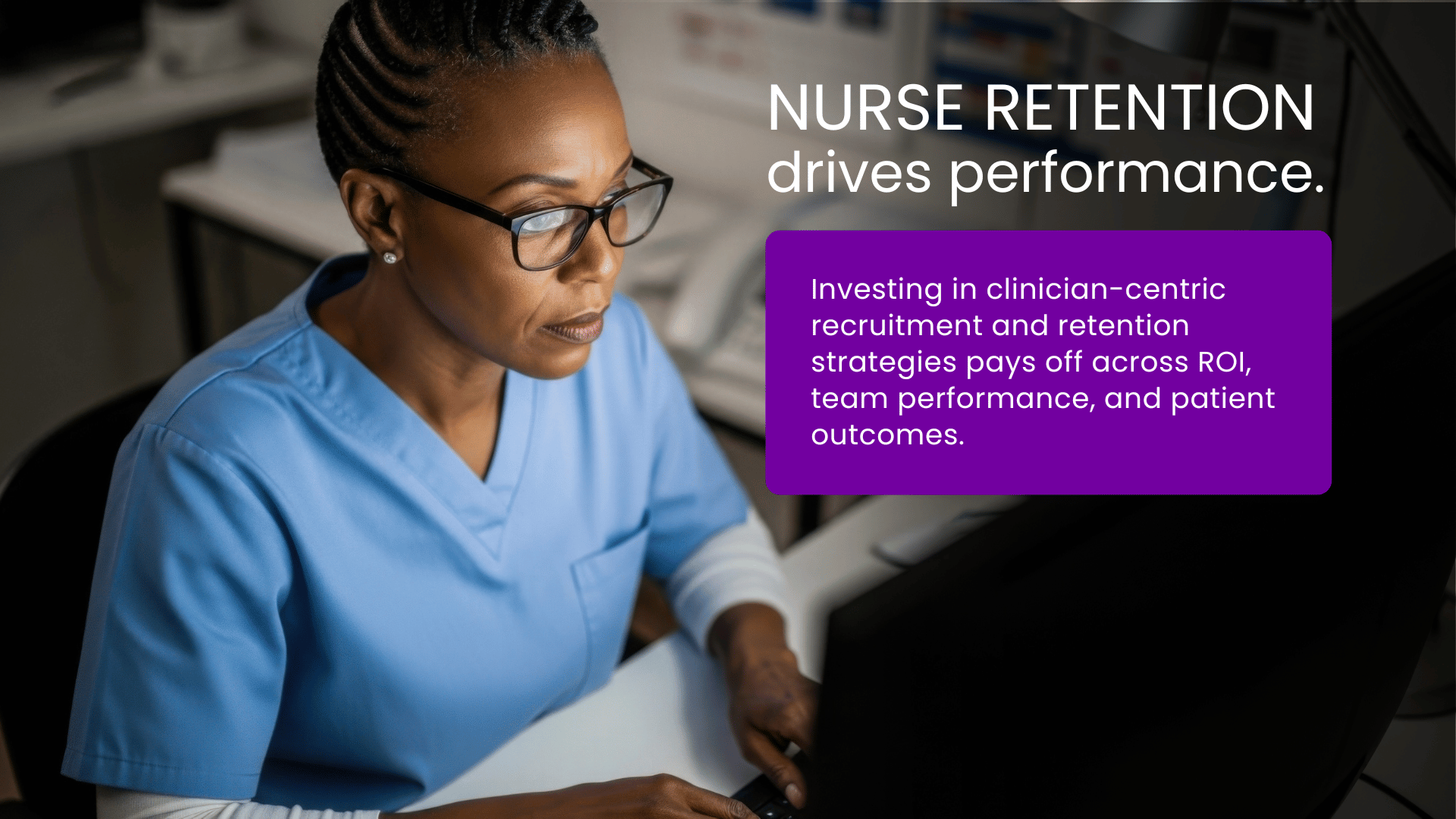
Hospitals struggling with unfilled positions and turnover must rethink how they attract and retain talent. Those adopting modern healthcare talent acquisition strategies see measurable results: lower costs, higher retention, and more satisfied clinicians.
Data-Driven Hiring and Targeting
Guesswork is no longer enough. Health system recruitment analytics allow hospitals to see what works and what does not. Tracking channel performance, identifying skill gaps, and predicting retention risks help leaders make smarter hiring decisions. The result is better hires, less wasted spend, and a recruitment process that delivers real ROI.
Flexible Work Models to Attract Top Talent
Flexible schedules are a recruitment advantage. Hospitals offering flexible clinician scheduling, hybrid shifts, or telehealth options attract clinicians who stay longer, perform better, and remain engaged. These models also help hospitals align staffing with patient demand, reduce burnout, and improve overall team performance.
For CNOs and CHROs, modernizing recruitment with data insights and flexible work models is not just about filling jobs. It is about building a workforce that delivers results and excellence in patient care.
How C-Suite Leaders Can Drive Change
Focusing only on filling vacancies is no longer enough. Strategic recruitment is about more than numbers. CNOs and CHROs need to approach hiring intentionally, aligning recruitment with the hospital’s mission, culture, and long-term goals.
Align Recruitment With Organizational Goals
Every hire should strengthen clinical capability and organizational culture. By following healthcare executive hiring best practices, leaders ensure recruitment supports patient care, operational efficiency, and team cohesion. The priority is hiring clinicians who align with the hospital’s values and long-term vision, not just those available to start immediately.
Measure ROI and Optimize Continuously
Recruitment is never “set it and forget it.” Tracking key healthcare recruitment metrics, such as time-to-fill, cost-per-hire, retention rates, and clinician satisfaction, gives leaders insight into what is working. With these insights, hospitals can adjust strategies, optimize spend, and improve ROI while ensuring every hire contributes to long-term success.
Conclusion: From Wasted Spend to Strategic Recruitment Wins
Traditional recruitment strategies with rigid schedules, generic outreach, and mass postings are no longer effective. They lead to wasted spend, high turnover, and missed opportunities to attract top clinicians.
For CNOs and CHROs, the solution is clear: adopt modern, data-driven, and clinician-focused healthcare recruitment strategies. Combine analytics with flexible work models, continuously measure outcomes, and focus on hires that align with clinical excellence and organizational goals.
By addressing healthcare recruitment challenges head-on, hospitals can improve ROI, retain top talent, and build a workforce that consistently delivers high-quality patient care. In today’s competitive labor market, strategic recruitment is not just a function; it is a critical advantage for organizational success.